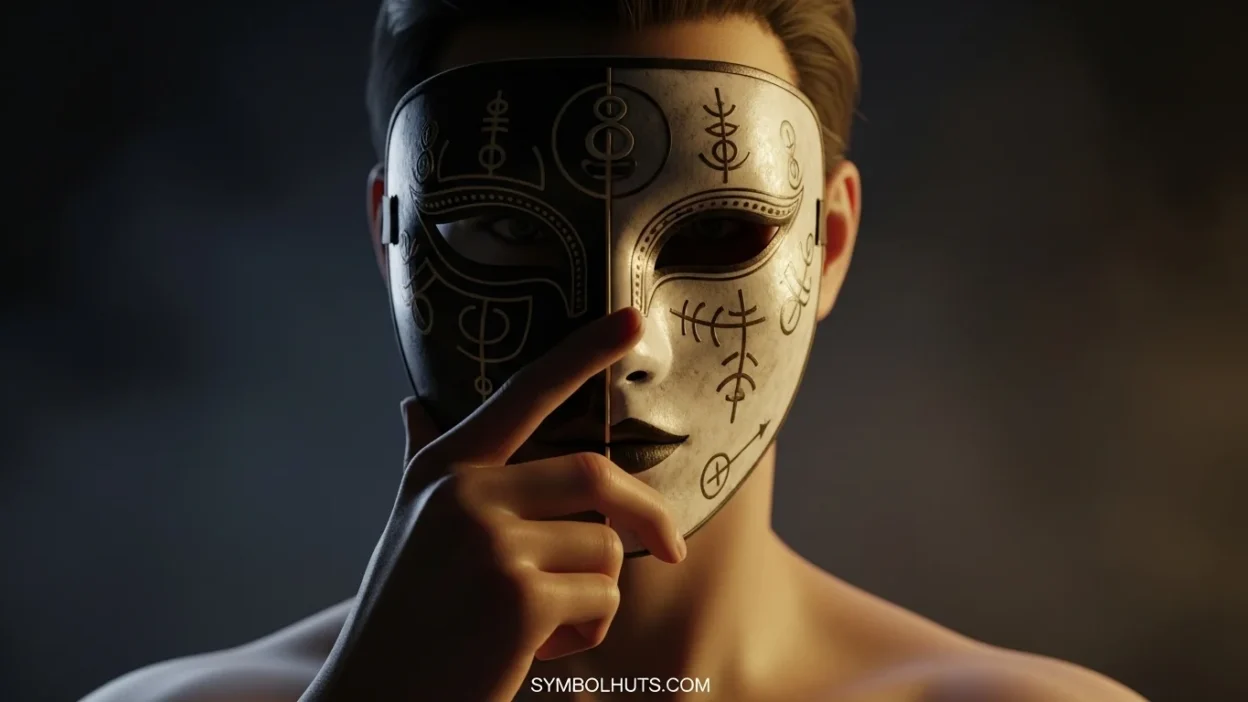
Mask symbolism explores the powerful idea of hiding, revealing, and transforming identity.
Across cultures and history, masks have been used not only for disguise but also for protection, expression, and spiritual connection.
If worn in rituals, art, or everyday life, masks reflect the dual nature of human identity—what we show to the world and what we keep hidden within.
Mask Symbolism Meaning (Clear Definition)
Mask symbolism refers to the representation of concealment, identity, transformation, and emotional protection.
At its core, a mask symbolizes the difference between one’s outer appearance and inner reality. It can represent both deception and self-preservation, depending on the context.
What Does Mask Symbolism Represent?
Masks carry layered meanings that vary based on culture and situation. Common interpretations include:
- Hidden identity – Concealing true feelings or personality
- Transformation – Becoming someone or something else
- Protection – Shielding oneself emotionally or physically
- Deception – Hiding truth or intentions
- Freedom – Acting without fear of judgment
Quick Symbolism Summary
| Symbolic Aspect | Meaning |
|---|---|
| Concealment | Hiding true self or emotions |
| Transformation | Change in identity or role |
| Protection | Emotional or psychological defense |
| Mystery | Unknown or secret identity |
| Expression | Revealing hidden desires or creativity |
Spiritual Meaning of Mask Symbolism
Spiritually, masks symbolize the illusion of the ego and the journey toward authenticity.
In many traditions, wearing a mask represents stepping into a higher or different state of being. It can signify:
- Letting go of the ego
- Connecting with spiritual entities
- Exploring deeper layers of the self
- Understanding the difference between illusion and truth
Masks remind us that spiritual growth often requires removing false identities to discover our true essence.
Biblical / Religious Meaning of Mask Symbolism
While masks are not directly emphasized in biblical texts, their symbolism aligns with themes of hypocrisy and inner truth.
In a religious sense, a mask can represent:
- False appearances – Pretending to be righteous
- Inner vs. outer self – The importance of sincerity
- Spiritual honesty – Being true before God
The idea is clear: what lies beneath the surface matters more than outward appearances.
Mask Symbolism in History and Culture
Masks have played an essential role in cultures around the world for centuries.
- In African traditions, masks are used in rituals to connect with ancestors and spirits
- In Japanese Noh theater, masks express complex emotions and character identities
- In ancient Greek theater, actors wore masks to portray different roles and amplify expressions
- During festivals like carnivals, masks symbolize freedom and social equality
Across cultures, masks often blur the line between reality and performance.
Mask Symbolism in Literature and Art
In literature and art, masks are powerful metaphors for identity and illusion.
Writers and artists use masks to explore:
- The contrast between true self and public persona
- Themes of secrecy, deception, and duality
- Psychological struggles and hidden emotions
Characters wearing masks often reveal deeper truths about human nature, showing that identity is not always what it seems.
Dream Meaning of Mask Symbolism
Seeing a mask in a dream often reflects hidden emotions or unresolved identity issues.
Common interpretations include:
- Wearing a mask – You may be hiding your true feelings
- Seeing others in masks – Someone around you may not be honest
- Removing a mask – A desire for truth, authenticity, or self-discovery
Dreams about masks encourage self-reflection and honesty with oneself.
Modern Meaning of Mask Symbolism
In today’s world, masks have taken on both literal and symbolic meanings.
Modern interpretations include:
- Social masks – The personas we present on social media
- Emotional barriers – Hiding vulnerability in daily life
- Health and safety – Physical protection in uncertain times
- Identity exploration – Freedom to express different sides of oneself
Today, mask symbolism is more relevant than ever, reflecting how people navigate identity in a complex world.
FAQs:
What does a mask symbolize in general?
A mask generally symbolizes hidden identity, protection, or transformation, representing the gap between appearance and reality.
Is mask symbolism positive or negative?
It can be both. Masks may protect and empower, but they can also represent deception or emotional hiding.
What does wearing a mask mean spiritually?
Spiritually, it often represents illusion, ego, or the journey toward discovering one’s true self.
What does a mask in a dream mean?
It usually suggests hidden feelings, dishonesty, or a need to reveal your true identity.
Why are masks used in cultures?
Masks are used for rituals, storytelling, spiritual connection, and expressing identity or transformation.
Conclusion
Mask symbolism reveals a deep truth about human nature—we all wear masks at times.
If for protection, transformation, or expression, masks remind us of the balance between hiding and revealing.
Understanding this symbolism encourages authenticity and helps us connect more honestly with ourselves and others.

Christian Jeremy is a creative content writer and digital strategist at SymbolHuts.com. She specializes in exploring symbols, meanings, and visual communication, providing insightful and engaging content. With a passion for design and language, Christian helps readers understand symbolism, improve visual literacy, and connect with ideas in a clear and inspiring way.