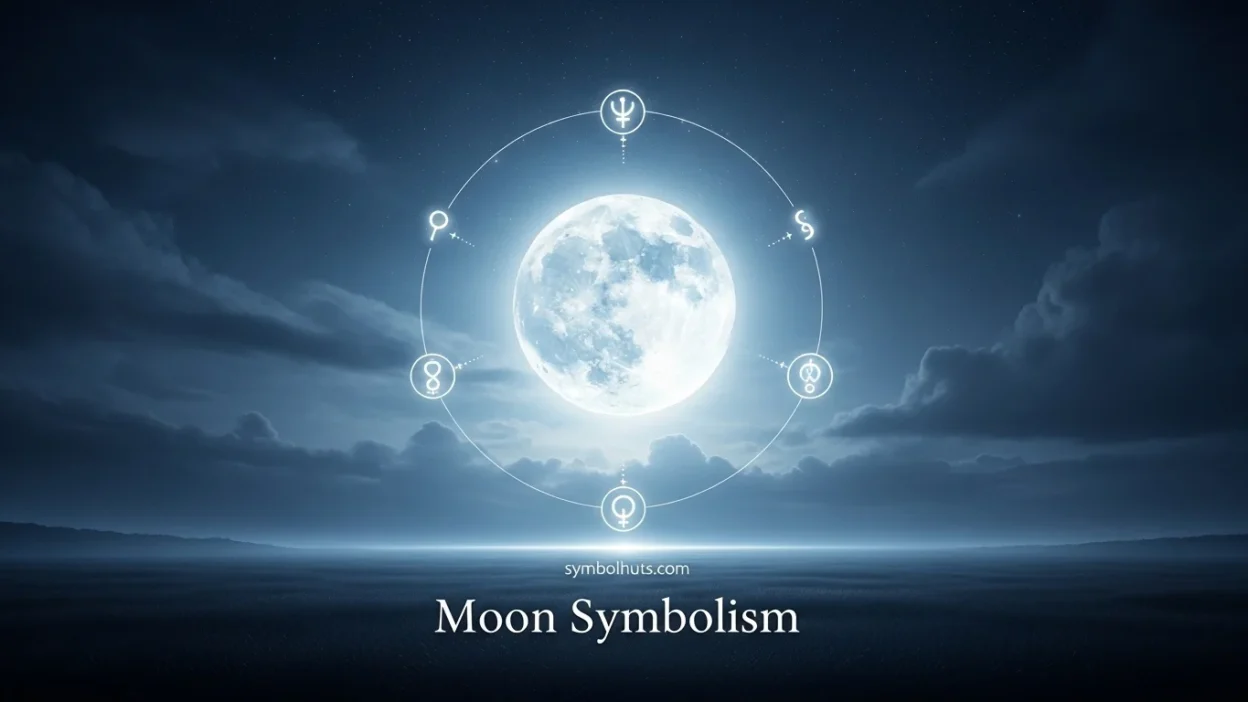
Moon symbolism has fascinated humanity for thousands of years. The moon, glowing softly in the night sky, has long represented mystery, intuition, and emotional depth.
Across cultures, people view the moon as a powerful symbol connected to cycles, transformation, and inner wisdom.
From ancient myths to modern spirituality, moon symbolism reflects the natural rhythms of life, reminding us that change, growth, and renewal are always possible.
Moon Symbolism Meaning (Clear Definition)
Moon symbolism refers to the meanings and ideas people associate with the moon and its phases. It often represents cycles, emotions, intuition, and transformation.
The moon’s changing phases—from new moon to full moon—symbolize the natural cycle of birth, growth, completion, and renewal. Because it shines in darkness, the moon is also connected with mystery, reflection, and hidden knowledge.
In simple terms, moon symbolism represents the rhythm of life, emotional awareness, and personal transformation.
What Does Moon Symbolism Represent?
The moon carries several symbolic meanings that appear in myths, religion, and spiritual beliefs around the world.
Common meanings of moon symbolism include:
- Transformation – The moon’s phases represent constant change and growth.
- Intuition – Often associated with inner wisdom and subconscious awareness.
- Femininity – The moon is frequently connected with feminine energy and fertility.
- Mystery – Its nighttime presence symbolizes hidden truths and secrets.
- Cycles of life – Birth, death, and renewal mirror the lunar cycle.
- Emotions – The moon is often linked with feelings and emotional balance.
These meanings make the moon one of the most powerful and universal symbols in human culture.
Spiritual Meaning of Moon Symbolism
Spiritually, moon symbolism represents inner reflection, intuition, and spiritual growth. Many spiritual traditions believe the moon influences emotional and energetic cycles.
The new moon is often associated with new beginnings and setting intentions. The full moon symbolizes clarity, completion, and heightened awareness.
In spiritual practices such as meditation, astrology, and energy work, the moon is believed to guide people toward deeper self-understanding and emotional balance. Its gentle light reminds us to trust our inner voice and embrace change.
Biblical / Religious Meaning of Moon Symbolism
In religious contexts, the moon is often viewed as a sign of divine order and guidance.
In the Bible, the moon is described as part of God’s creation that marks times, seasons, and days. It represents the natural order of the universe and God’s control over time and cycles.
In other religious traditions:
- Islamic culture uses the lunar calendar to determine important religious dates.
- Hindu traditions connect the moon with the mind and emotional awareness.
- Ancient pagan beliefs associated the moon with fertility and divine feminine energy.
These interpretations highlight the moon as a symbol of guidance, rhythm, and divine timing.
Moon Symbolism in History and Culture
Throughout history, the moon has played an important role in mythology, agriculture, and cultural traditions.
Ancient civilizations closely observed lunar phases to track time and seasons. Many festivals and rituals were organized according to the lunar calendar.
Examples of moon symbolism in different cultures include:
- Ancient Greece associated the moon with the goddess Artemis.
- Chinese culture celebrates the Moon Festival honoring harmony and family unity.
- Native American traditions named each full moon based on seasonal changes.
These traditions show how deeply moon symbolism is woven into human history.
Moon Symbolism in Literature and Art
In literature and art, the moon is often used to represent emotion, romance, mystery, and imagination.
Poets and writers frequently describe moonlight to create a calm, dreamy atmosphere. The moon may symbolize longing, hidden emotions, or personal reflection.
Artists also use the moon as a visual symbol of beauty and serenity. Paintings featuring moonlit landscapes often evoke feelings of peace, wonder, and contemplation.
Because of its emotional and mystical qualities, the moon remains a powerful artistic symbol.
Dream Meaning of Moon Symbolism
Seeing the moon in a dream often relates to intuition, emotional awareness, and personal insight.
Different moon appearances in dreams can suggest different meanings:
- Full moon – clarity, completion, or emotional fulfillment
- New moon – new beginnings or hidden opportunities
- Bright moonlight – spiritual guidance or inner truth
- Clouded moon – confusion or emotional uncertainty
Dreams about the moon often encourage the dreamer to listen to their intuition and trust their feelings.
Modern Meaning of Moon Symbolism
In modern life, moon symbolism continues to represent balance, mindfulness, and emotional awareness.
Many people follow lunar phases for:
- personal reflection
- goal setting during the new moon
- releasing negativity during the full moon
- meditation and spiritual practices
The moon has also become a popular symbol in tattoos, jewelry, and spiritual art, representing personal transformation and connection with nature.
Symbolic Meanings of the Moon
| Symbolic Meaning | Explanation |
|---|---|
| Change and cycles | The moon’s phases represent life’s constant transformations |
| Intuition | Associated with inner wisdom and subconscious insight |
| Feminine energy | Linked with fertility, nurturing, and divine feminine power |
| Mystery | Represents hidden truths and spiritual discovery |
| Emotional depth | Connected with feelings and inner reflection |
| Renewal | Symbolizes new beginnings and personal growth |
FAQs:
What does the moon symbolize spiritually?
Spiritually, the moon symbolizes intuition, emotional awareness, and personal transformation. It represents cycles of growth, reflection, and renewal.
Why is the moon connected with femininity?
The moon is often linked to femininity because its cycles mirror natural rhythms associated with fertility, nurturing, and creation in many traditions.
What does a full moon symbolize?
A full moon symbolizes completion, clarity, and heightened awareness. It often represents the peak of energy, understanding, or emotional realization.
What does the moon mean in dreams?
In dreams, the moon usually represents intuition, emotions, and hidden truths. The moon’s phase can influence the dream’s symbolic meaning.
Why is the moon considered mysterious?
The moon shines in darkness and constantly changes shape, making it a symbol of mystery, secrets, and the unseen aspects of life.
Conclusion
Moon symbolism reminds us of the powerful rhythms that guide life. Its changing phases reflect transformation, intuition, and emotional growth.
If viewed through spirituality, culture, or art, the moon continues to inspire people to embrace change, trust their inner wisdom, and appreciate the natural cycles that shape our world.

Walter Terry is a skilled content creator and symbol researcher at SymbolHuts.com. He specializes in explaining symbols, their meanings, and visual communication in a clear, engaging way. Walter’s insightful content helps readers interpret visuals, understand symbolism, and connect ideas effectively across digital, educational, and creative contexts.