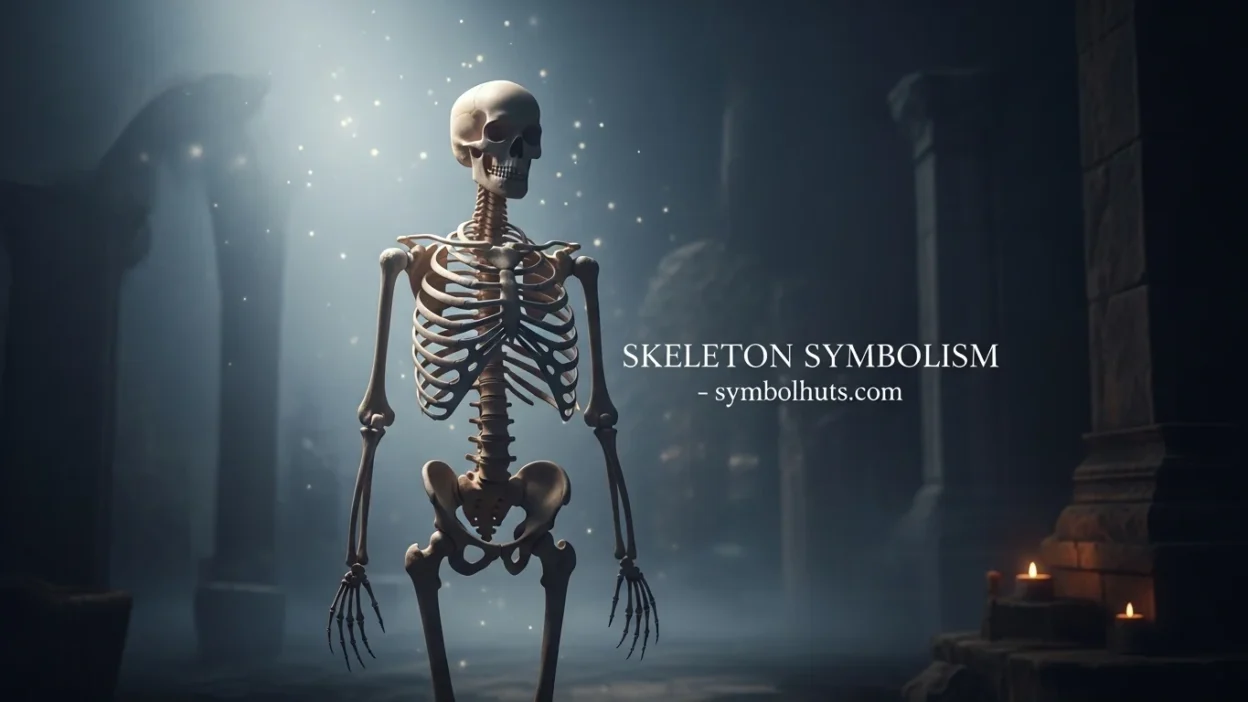
Skeleton symbolism has fascinated humanity for centuries, representing far more than just bones. It speaks to the deeper truths of life, death, and what lies beneath the surface.
From ancient rituals to modern art, skeletons remind us of our shared humanity and the cycles of existence.
Understanding skeleton symbolism can reveal powerful insights about transformation, resilience, and the essence of life itself.
Skeleton Symbolism Meaning (Clear Definition)
Skeleton symbolism refers to the representation of mortality, structure, truth, and transformation through the image of bones or a human skeleton. It often highlights what remains after everything superficial is stripped away.
In its simplest form, a skeleton symbolizes:
- The foundation of life
- The inevitability of death
- The truth beneath appearances
What Does Skeleton Symbolism Represent?
Skeleton symbolism carries multiple layers of meaning depending on context. Common interpretations include:
- Mortality and impermanence – A reminder that life is temporary
- Truth and authenticity – Stripping away illusions to reveal reality
- Transformation and rebirth – Endings that lead to new beginnings
- Strength and support – The structural framework that holds everything together
- Fear and the unknown – Often linked to death or mystery
Quick Symbolism Overview
| Symbol Aspect | Meaning |
|---|---|
| Bones | Strength and foundation |
| Skull | Awareness of mortality |
| Full skeleton | Life cycle and transformation |
| Hidden skeleton | Secrets or hidden truths |
Spiritual Meaning of Skeleton Symbolism
Spiritually, skeleton symbolism often points to inner awakening and deep transformation. It encourages letting go of ego, attachments, and illusions.
Many spiritual interpretations see skeletons as:
- A sign of rebirth after personal loss
- A reminder to focus on the soul rather than the physical body
- A symbol of endurance through difficult phases
In this sense, skeleton symbolism is not negative—it represents growth through endings.
Biblical / Religious Meaning of Skeleton Symbolism
In religious contexts, especially within Christianity, skeleton symbolism is often tied to themes of resurrection and divine power.
For example:
- The vision of dry bones coming to life symbolizes hope and spiritual renewal
- Bones represent God’s ability to restore life and purpose
In other traditions:
- Skeletons may symbolize karma and the cycle of life and death
- They can also reflect detachment from worldly desires
Skeleton Symbolism in History and Culture
Throughout history, skeleton symbolism has appeared in rituals, art, and cultural traditions worldwide.
- In ancient cultures, skeletons were used to honor ancestors
- During medieval times, they symbolized the “Dance of Death”, reminding all people of equality in death
- In Mexican culture, skeleton imagery celebrates life during festivals like Día de los Muertos, showing death as a natural part of existence
These cultural uses highlight how skeleton symbolism can be both solemn and celebratory.
Skeleton Symbolism in Literature and Art
In literature and art, skeleton symbolism is often used to explore deeper emotional and philosophical themes.
Writers and artists use skeletons to represent:
- Hidden truths or secrets (“skeletons in the closet”)
- The fragility of life
- The contrast between appearance and reality
In visual art, skeletons can be eerie, but they also carry beauty in simplicity, showing the raw structure of life.
Dream Meaning of Skeleton Symbolism
Dreaming of a skeleton can have powerful psychological and emotional meanings.
Common interpretations include:
- Facing hidden fears or truths
- Letting go of the past
- Feeling emotionally exposed or vulnerable
- Transformation or personal change
If the skeleton appears calm or peaceful, it may symbolize acceptance and inner clarity.
Modern Meaning of Skeleton Symbolism
In modern times, skeleton symbolism has evolved beyond fear and death.
Today, it often represents:
- Authenticity and transparency
- Inner strength and resilience
- Minimalism and simplicity
- Rebellion against superficial standards
Skeleton imagery is also widely used in fashion, tattoos, and pop culture to express individuality and deeper meaning.
FAQs:
What does a skeleton symbolize spiritually?
Spiritually, a skeleton symbolizes transformation, inner truth, and the shedding of illusions to reveal the soul’s essence.
Is skeleton symbolism negative?
Not necessarily. While it represents death, it also symbolizes rebirth, strength, and the deeper truths of life.
What does dreaming about a skeleton mean?
It often reflects hidden fears, personal transformation, or the need to confront truth and let go of the past.
Why are skeletons associated with truth?
Because they represent what remains after everything superficial is removed, symbolizing honesty and authenticity.
What does a skull symbolize in skeleton symbolism?
A skull specifically represents awareness of mortality, wisdom, and the importance of living consciously.
Conclusion
Skeleton symbolism goes far beyond the idea of death—it reveals the core truths of existence.
It reminds us to embrace change, live authentically, and find strength in life’s cycles.
If seen in dreams, culture, or spirituality, the skeleton stands as a powerful symbol of transformation, resilience, and truth.

Noah Peter is a talented writer and researcher at SymbolHuts.com. She focuses on symbols, their meanings, and visual communication, delivering clear, engaging content. With a passion for design and creative expression, Noah empowers readers to understand symbolism, interpret visuals confidently, and connect ideas effectively in everyday life and digital spaces.