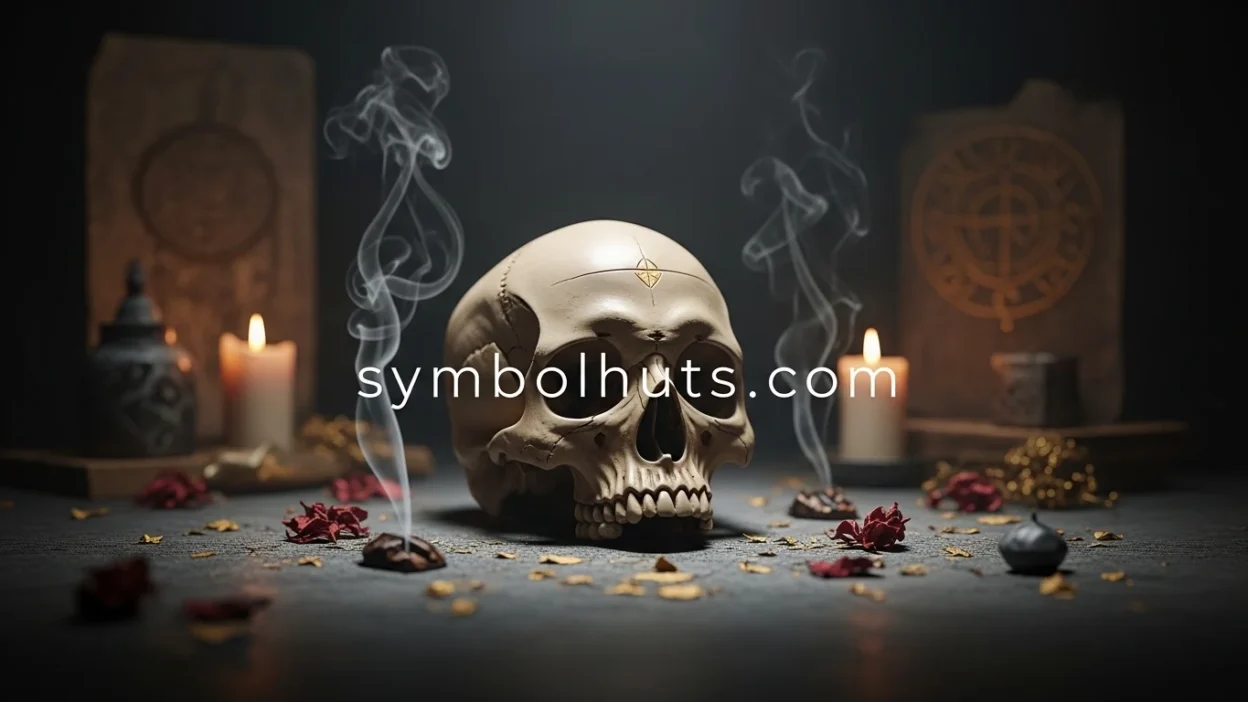
Skull symbolism has fascinated humanity for centuries, representing far more than just death.
It reflects deep ideas about mortality, transformation, protection, and even rebirth. Across cultures and beliefs, the skull serves as a reminder that life is temporary—but also meaningful.
Understanding skull symbolism helps you see how something often feared can actually hold powerful, inspiring messages about growth, awareness, and the cycle of existence.
Skull Symbolism Meaning (Clear Definition)
Skull symbolism refers to the representation of the human skull as a symbol of mortality, transformation, protection, and the cycle of life and death.
At its core, the skull is a visual reminder that:
- Life is temporary
- Death is inevitable
- Transformation is constant
Rather than being purely negative, it often symbolizes awareness, strength, and spiritual awakening.
What Does Skull Symbolism Represent?
Skull symbolism carries multiple meanings depending on context, culture, and personal interpretation.
Key Symbolic Meanings:
- Mortality – A reminder of life’s limited time
- Transformation – Change, rebirth, and personal growth
- Protection – Used as a ward against evil in some traditions
- Power & Strength – Fearlessness in facing reality
- Wisdom – Awareness of life’s deeper truths
Quick Summary Table
| Symbol Aspect | Meaning |
|---|---|
| Death | End of physical life |
| Rebirth | New beginnings |
| Protection | Shield from negative energy |
| Awareness | Mindfulness of life’s value |
| Strength | Courage and resilience |
Spiritual Meaning of Skull Symbolism
Spiritually, skull symbolism goes beyond physical death. It represents the death of the ego and the beginning of spiritual awakening.
Many spiritual traditions view the skull as:
- A symbol of inner transformation
- A reminder to detach from material illusions
- A gateway to higher consciousness
Seeing or meditating on skull imagery may encourage you to:
- Let go of fear
- Embrace change
- Focus on your true purpose
Biblical / Religious Meaning of Skull Symbolism
In religious contexts, skull symbolism often connects to mortality and humility.
In Christianity:
- The skull represents human mortality and sin
- It reminds believers of the phrase “from dust you came, to dust you shall return”
- Skulls are sometimes depicted at the base of crosses to symbolize redemption and eternal life
In other traditions:
- It may represent the cycle of death and rebirth
- Or serve as a protective spiritual symbol
Skull Symbolism in History and Culture
Throughout history, skull symbolism has appeared in many cultures with unique interpretations.
Notable Cultural Meanings:
- Ancient civilizations – Skulls were used in rituals to honor ancestors
- Mexican culture – Celebrated during Día de los Muertos as joyful remembrance
- Pirate culture – The skull and crossbones symbolized danger and warning
- Tribal traditions – Represented strength, protection, and spiritual power
These diverse meanings show that skull symbolism is not just about death—it’s about how we understand life.
Skull Symbolism in Literature and Art
In literature and art, skull symbolism is often used to explore deep philosophical themes.
Common interpretations include:
- Vanity and time – Reminding us that beauty and wealth are temporary
- Existential reflection – Questioning life’s purpose
- Duality of life and death – Showing how both are interconnected
Artists frequently use skull imagery to provoke thought and emotion, making it one of the most powerful visual symbols.
Dream Meaning of Skull Symbolism
Dreaming of a skull can feel intense, but it usually carries meaningful messages.
Common Dream Interpretations:
- Personal transformation – You’re going through change
- Letting go – Releasing past fears or habits
- Awareness – Facing truth or reality
- Hidden fears – Confronting something you’ve avoided
The meaning often depends on how you feel in the dream—fear, calmness, or curiosity.
Modern Meaning of Skull Symbolism
Today, skull symbolism is widely used in fashion, tattoos, and design.
Modern interpretations include:
- Individuality and rebellion
- Fearlessness and boldness
- Acceptance of life’s reality
- Celebration of life through awareness of death
Rather than being dark, skulls are now often seen as empowering symbols of strength and authenticity.
FAQs:
What does skull symbolism mean spiritually?
Spiritually, skull symbolism represents transformation, ego death, and awakening to higher consciousness.
Is skull symbolism always negative?
No, it often symbolizes protection, strength, and personal growth—not just death.
What does a skull represent in dreams?
It usually reflects transformation, awareness, or the need to confront hidden fears.
Why are skulls used in art and fashion?
They symbolize boldness, individuality, and acceptance of life’s temporary nature.
What does a skull tattoo symbolize?
A skull tattoo can represent resilience, survival, transformation, or a reminder to live fully.
Conclusion
Skull symbolism is far more meaningful than it first appears. While it reminds us of mortality, it also encourages transformation, courage, and awareness.
By embracing its deeper message, the skull becomes not a symbol of fear—but a powerful guide to living a more conscious and meaningful life.

Noah Peter is a talented writer and researcher at SymbolHuts.com. She focuses on symbols, their meanings, and visual communication, delivering clear, engaging content. With a passion for design and creative expression, Noah empowers readers to understand symbolism, interpret visuals confidently, and connect ideas effectively in everyday life and digital spaces.