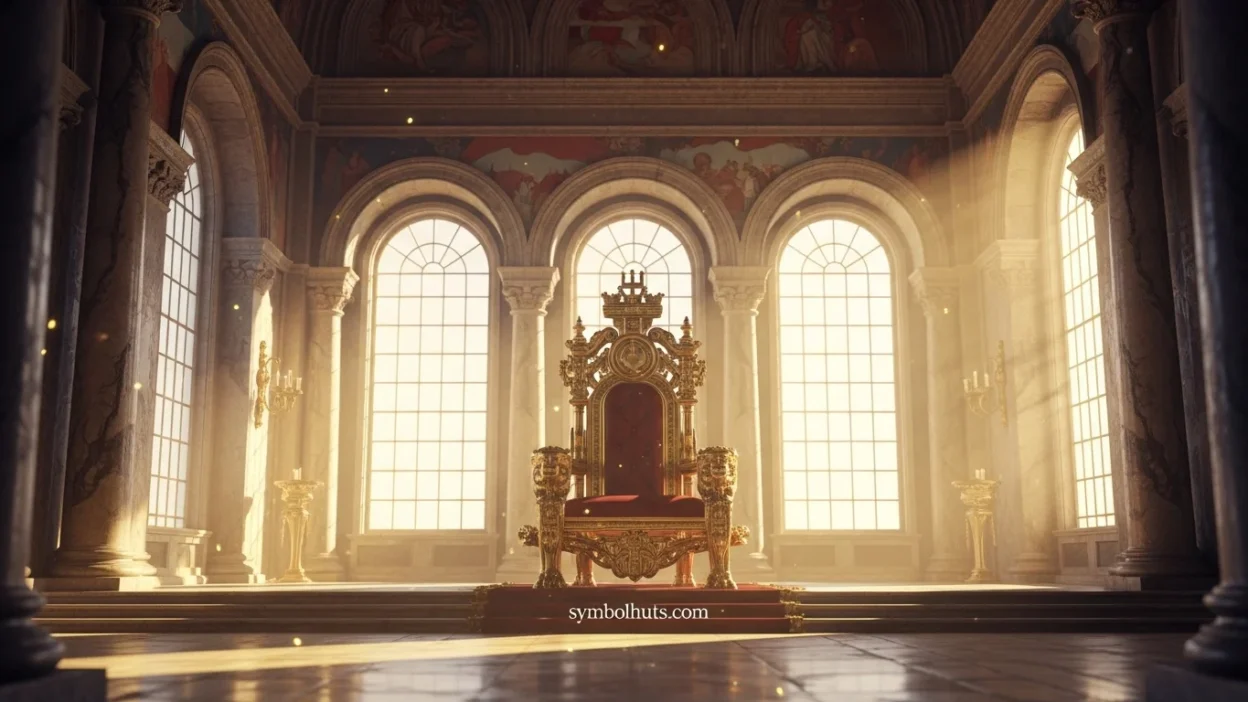
Throne symbolism has fascinated cultures for centuries, representing far more than just a royal chair. It embodies authority, divine right, leadership, and the weight of responsibility.
If seen in ancient kingdoms, spiritual texts, or modern storytelling, the throne stands as a powerful symbol of control, legitimacy, and inner strength.
Throne Symbolism Meaning (Clear Definition)
At its core, throne symbolism refers to the representation of power, authority, and rulership. A throne is not just a seat—it is a position of command and influence.
It often symbolizes:
- Leadership and sovereignty
- Judgment and justice
- Prestige and honor
- Responsibility and duty
In symbolic terms, sitting on a throne means holding control, while an empty throne may represent lost power or transition.
What Does Throne Symbolism Represent?
The symbolism of a throne extends into many layers of meaning, depending on context. It is commonly associated with both external authority and internal mastery.
Key Representations:
- Power and Control – The throne is the ultimate symbol of command.
- Legitimacy – It reflects rightful leadership or earned authority.
- Responsibility – Holding power comes with accountability.
- Hierarchy – It defines status and rank in society.
- Stability or Instability – A secure throne symbolizes order, while a threatened one reflects chaos.
Spiritual Meaning of Throne Symbolism
Spiritually, the throne often represents higher consciousness and divine authority. It can symbolize the “seat of the soul” or the place where inner wisdom resides.
In spiritual interpretations:
- The throne reflects self-mastery and inner control
- It represents alignment with higher purpose
- It symbolizes awakening to personal power
Some traditions view the heart or mind as a “throne,” where one’s true essence rules.
Biblical / Religious Meaning of Throne Symbolism
In religious contexts, especially in biblical texts, the throne holds deep sacred meaning.
Key Religious Interpretations:
- God’s Throne symbolizes ultimate authority and divine judgment
- It represents justice, righteousness, and eternal power
- Heavenly thrones often indicate spiritual hierarchy and divine order
The throne is frequently depicted as a place of divine presence, reinforcing the idea that true authority comes from a higher power.
Throne Symbolism in History and Culture
Throughout history, thrones have been central to royal identity and political systems.
Cultural Significance:
- In ancient empires, the throne symbolized absolute monarchy
- In Eastern traditions, it often represented balance and harmony in leadership
- In medieval Europe, thrones reflected divine right of kings
The design and material of a throne—gold, jewels, or carvings—often emphasized wealth, dominance, and cultural values.
Throne Symbolism in Literature and Art
In literature and art, the throne is a powerful visual and narrative symbol.
Common Themes:
- Struggle for Power – Characters fighting to claim the throne
- Corruption of Authority – Power changing those who hold it
- Legacy and Destiny – The throne as a birthright or fate
Artists often depict thrones to highlight themes of dominance, ambition, or even isolation, as rulers are often portrayed as alone at the top.
Dream Meaning of Throne Symbolism
Dreaming about a throne can carry strong personal messages.
Possible Interpretations:
- Sitting on a throne – You feel confident or in control
- Seeing an empty throne – Opportunity or leadership awaits
- Falling from a throne – Fear of losing power or status
- Broken throne – Instability or lack of control in life
These dreams often relate to self-worth, ambition, and personal authority.
Modern Meaning of Throne Symbolism
Today, throne symbolism goes beyond royalty and into everyday life.
Modern Interpretations:
- Leadership in career or life
- Personal empowerment
- Taking control of your decisions
- Owning your identity and confidence
In modern culture, “claiming your throne” often means stepping into your true power and embracing your role in life.
Summary of Throne Symbolism
| Aspect | Symbolic Meaning |
|---|---|
| Power | Authority, control |
| Leadership | Responsibility, guidance |
| Spiritual | Inner wisdom, divine connection |
| Cultural | Status, hierarchy |
| Emotional | Confidence, self-worth |
| Dream Interpretation | Ambition, fear, opportunity |
FAQs:
What does a throne symbolize in general?
A throne symbolizes power, authority, and leadership, often representing control and responsibility in both physical and spiritual contexts.
What is the spiritual meaning of a throne?
Spiritually, a throne represents inner authority, self-mastery, and connection to higher wisdom or divine power.
What does dreaming about a throne mean?
Dreaming of a throne often relates to personal power, ambition, or your position in life, depending on the dream context.
Why is the throne important in religion?
In religion, the throne symbolizes divine authority, judgment, and the presence of a higher power.
What does an empty throne symbolize?
An empty throne can represent opportunity, transition, or the absence of leadership and control.
Conclusion
Throne symbolism is a timeless representation of power, responsibility, and inner strength.
If seen in ancient kingdoms, spiritual teachings, or personal growth, the throne reminds us that true authority begins within.
To claim your throne is to embrace your purpose, lead with confidence, and take ownership of your life’s direction.