Tree symbolism has fascinated humans for thousands of years. Across cultures, religions, and traditions, trees represent life, growth, wisdom, and connection between heaven and earth.
From ancient myths to modern spiritual beliefs, the image of a tree often reflects stability, renewal, and the cycles of nature.
If appearing in dreams, sacred texts, or literature, tree symbolism carries powerful messages about resilience, personal development, and the interconnectedness of life.
Tree Symbolism Meaning (Clear Definition)
Tree symbolism refers to the representation of life, growth, stability, wisdom, and connection in human culture and spirituality.
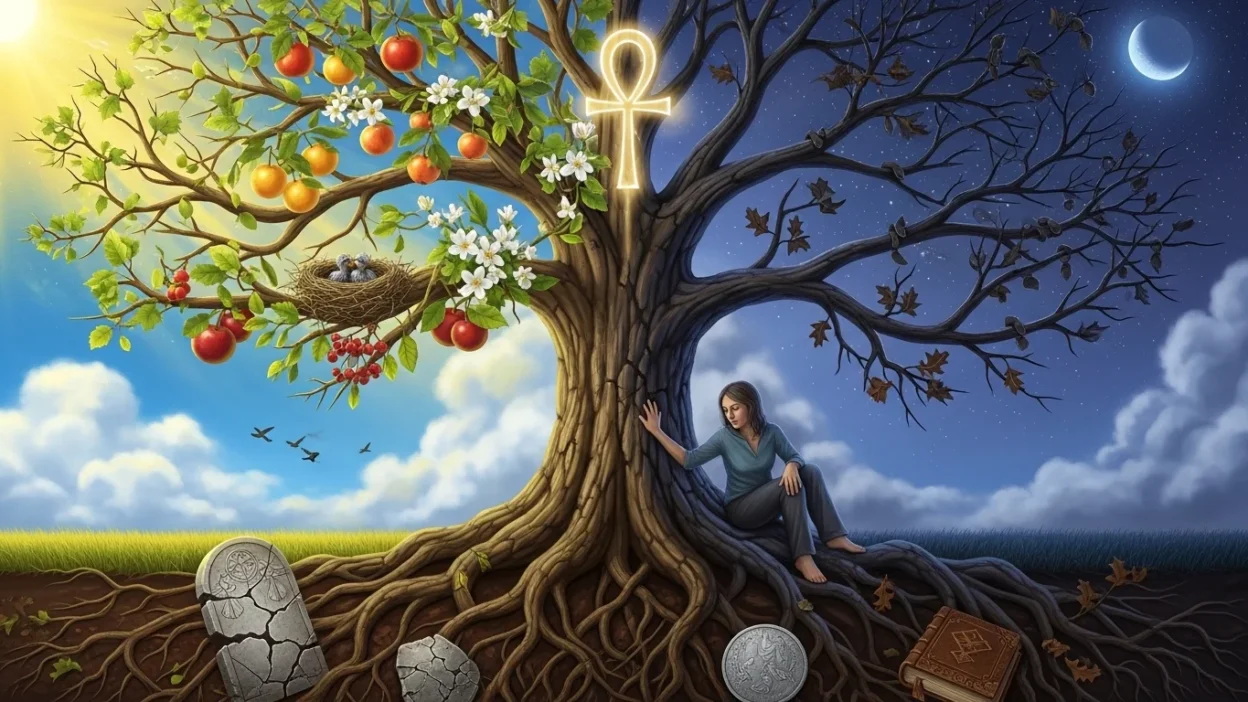
Trees symbolize the balance between earth and sky: their roots anchor them to the ground, while their branches reach toward the heavens. Because of this unique structure, trees often represent the connection between physical and spiritual worlds.
In symbolic terms, trees commonly represent:
- Growth and personal development
- Strength and resilience
- Wisdom and knowledge
- Life cycles and renewal
- Stability and grounding
What Does Tree Symbolism Represent?
Tree symbolism carries many meanings depending on culture, context, and tradition. However, several universal interpretations appear throughout history.
Common symbolic meanings of trees
| Symbolic Meaning | Explanation |
|---|---|
| Growth | Trees grow slowly and steadily, symbolizing personal progress and development. |
| Strength | Their deep roots represent stability and endurance through challenges. |
| Life | Trees provide oxygen, shelter, and food, making them symbols of life itself. |
| Wisdom | Ancient trees often represent knowledge gained through time. |
| Renewal | Seasonal changes in leaves symbolize rebirth and new beginnings. |
| Connection | Trees link earth, sky, and life in many spiritual traditions. |
Because of these qualities, trees frequently symbolize life cycles, transformation, grounding energy, and natural balance.
Spiritual Meaning of Tree Symbolism
Spiritually, trees often symbolize the connection between the physical and spiritual realms.
Many spiritual traditions see the tree as a sacred bridge:
- Roots represent grounding and ancestry
- Trunk symbolizes stability and personal strength
- Branches represent spiritual growth and higher consciousness
The concept of the “Tree of Life” appears in many belief systems and represents the interconnectedness of all living things.
Spiritually, tree symbolism may represent:
- Spiritual growth
- Inner wisdom
- Balance between mind, body, and spirit
- Connection with nature
- Personal transformation
Meditation practices sometimes visualize trees to encourage grounding, patience, and emotional stability.
Biblical / Religious Meaning of Tree Symbolism
Trees play an important symbolic role in many religious traditions.
In the Bible, trees often represent life, faith, and divine wisdom.
Two well-known symbolic trees include:
- The Tree of Life — representing eternal life and divine connection
- The Tree of Knowledge of Good and Evil — symbolizing moral awareness and human choice
In Christian symbolism, a flourishing tree may represent a righteous and faithful person whose life bears good fruit.
Other religions also emphasize sacred trees:
- In Buddhism, enlightenment occurred under the Bodhi Tree.
- In Hindu traditions, the Ashvattha tree represents cosmic creation and spiritual knowledge.
These sacred associations strengthen the idea that trees symbolize spiritual awakening and divine wisdom.
Tree Symbolism in History and Culture
Throughout history, trees have been revered as powerful cultural symbols.
Ancient civilizations often believed trees held sacred or mystical qualities.
Examples include:
- Celtic culture: Trees symbolized wisdom, protection, and sacred knowledge.
- Norse mythology: The cosmic tree Yggdrasil connected the nine worlds.
- Ancient Greece: The olive tree symbolized peace and prosperity.
- Native traditions: Trees represented ancestors, nature spirits, and harmony.
Many communities held ceremonies around sacred trees, recognizing them as symbols of life, fertility, and protection.
Tree Symbolism in Literature and Art
In literature and art, trees often symbolize growth, wisdom, and transformation.
Writers frequently use trees to represent a character’s development or emotional journey.
Common symbolic themes include:
- A growing tree representing personal growth
- A dying tree symbolizing loss or decline
- A blossoming tree representing hope and renewal
Artists also portray trees as powerful natural icons representing the beauty and endurance of life.
Paintings, poems, and stories often use tree imagery to evoke stability, memory, and the passage of time.
Dream Meaning of Tree Symbolism
Seeing a tree in a dream often carries symbolic meaning related to personal growth and emotional stability.
Dream interpretations can vary depending on the condition of the tree.
Common tree dream meanings
- Healthy green tree: Growth, happiness, and positive life progress
- Falling tree: Sudden change or instability
- Bare tree: Emotional challenges or a period of reflection
- Planting a tree: New beginnings and future success
- Climbing a tree: Ambition and striving toward goals
Overall, tree dreams often reflect the dreamer’s life direction, inner strength, and potential for growth.
Modern Meaning of Tree Symbolism
Today, tree symbolism remains powerful and widely recognized.
In modern culture, trees represent:
- Environmental awareness
- Sustainability and nature protection
- Personal growth and resilience
- Family roots and ancestry
- Balance and mindfulness
The “family tree” concept also reflects how trees symbolize lineage, heritage, and the connection between generations.
Many people use tree imagery in tattoos, logos, and artwork to express strength, growth, and connection to nature.
FAQs:
What does tree symbolism mean?
Tree symbolism represents growth, life, strength, wisdom, and the connection between the physical and spiritual worlds.
Why are trees considered symbols of life?
Trees provide oxygen, shelter, and nourishment, making them natural symbols of life, renewal, and the cycles of nature.
What does a tree represent spiritually?
Spiritually, a tree represents grounding, spiritual growth, balance, and the connection between earth and higher consciousness.
What does a tree symbolize in dreams?
In dreams, trees often symbolize personal growth, stability, life progress, or emotional development depending on the dream context.
Why are trees sacred in many cultures?
Trees are sacred because they live long, sustain life, and symbolize wisdom, endurance, and the connection between humans and nature.
Conclusion
Tree symbolism has endured for centuries because it reflects the fundamental patterns of life.
With roots grounded in the earth and branches reaching toward the sky, trees represent balance, strength, and continual growth.
If appearing in spiritual traditions, literature, dreams, or everyday life, trees remind us of resilience, renewal, and our deep connection to the natural world.

Noah Peter is a talented writer and researcher at SymbolHuts.com. She focuses on symbols, their meanings, and visual communication, delivering clear, engaging content. With a passion for design and creative expression, Noah empowers readers to understand symbolism, interpret visuals confidently, and connect ideas effectively in everyday life and digital spaces.