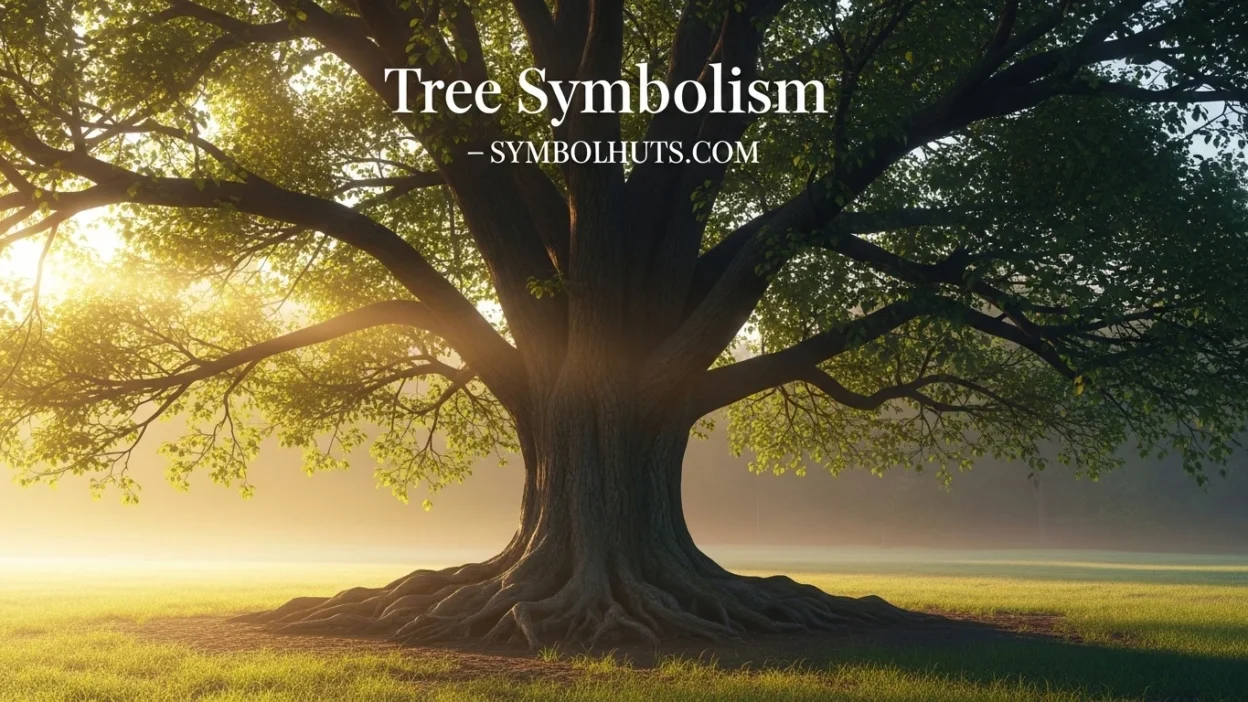
Tree symbolism has fascinated humans for thousands of years. Across cultures, religions, and traditions, trees represent life, strength, wisdom, and deep spiritual connection.
Because trees grow from tiny seeds into powerful living beings, they often symbolize personal growth, resilience, and the cycle of life.
From ancient myths to modern art, tree symbolism continues to inspire people.
If seen in dreams, spiritual teachings, or everyday nature, trees carry powerful meanings about balance, stability, and renewal.
Tree Symbolism Meaning (Clear Definition)
Tree symbolism refers to the deeper meanings and messages associated with trees in spiritual, cultural, and symbolic contexts.
At its core, a tree represents life, growth, stability, and connection between earth and heaven. Its roots anchor it to the ground while its branches reach toward the sky, symbolizing balance between the physical and spiritual worlds.
Trees also represent wisdom, endurance, fertility, protection, and transformation.
Common Symbolic Meanings of Trees
| Symbolic Meaning | Explanation |
|---|---|
| Growth | Trees grow slowly and steadily, symbolizing personal development. |
| Strength | Deep roots represent stability and resilience. |
| Life | Trees provide oxygen, fruit, and shelter, symbolizing life itself. |
| Wisdom | Ancient trees are often seen as symbols of knowledge. |
| Renewal | Seasonal changes reflect cycles of death and rebirth. |
| Connection | Roots, trunk, and branches symbolize links between worlds. |
What Does Tree Symbolism Represent?
Tree symbolism represents many powerful themes connected to nature and human life.
1. Growth and Personal Development
Trees grow gradually over time, reminding us that meaningful change requires patience and persistence.
2. Strength and Stability
With strong roots and tall trunks, trees symbolize resilience and the ability to stand firm during difficult times.
3. Connection Between Worlds
Many traditions see trees as bridges connecting earth, sky, and the spiritual realm.
4. Family and Legacy
Branches spreading outward often symbolize family lineage and generational growth.
5. Protection and Shelter
Trees provide shade and safety, symbolizing nurturing energy and protection.
Spiritual Meaning of Tree Symbolism
Spiritually, trees represent balance, grounding, and enlightenment.
The roots symbolize grounding and connection to the earth, while the branches represent spiritual expansion and higher awareness. This dual symbolism shows how people must stay grounded while still reaching for spiritual growth.
In many spiritual teachings, trees represent:
- Inner strength
- Spiritual awakening
- Harmony with nature
- Personal transformation
- The cycle of life and rebirth
The Tree of Life is one of the most universal spiritual symbols, representing interconnectedness between all forms of life.
Biblical / Religious Meaning of Tree Symbolism
In many religious traditions, trees hold sacred meaning.
Christianity
In the Bible, trees symbolize life, wisdom, and divine blessings. The Tree of Life appears in the Garden of Eden and represents eternal life and God’s presence.
Another important biblical symbol is the Tree of Knowledge, representing moral awareness and human choice.
Other Religious Traditions
Buddhism – The Bodhi Tree symbolizes enlightenment, as it is where Buddha attained spiritual awakening.
Celtic spirituality – Trees were sacred beings believed to connect the physical and spiritual worlds.
Hinduism – Trees often represent immortality, sacred knowledge, and divine protection.
Tree Symbolism in History and Culture
Throughout history, trees have played important roles in cultural symbolism.
Ancient civilizations often viewed trees as sacred guardians of nature. Large or ancient trees were treated with respect and sometimes used as spiritual meeting places.
Examples include:
- Celtic cultures believed trees contained spiritual energy.
- Norse mythology featured Yggdrasil, the cosmic tree connecting the universe.
- Native traditions often saw trees as living ancestors and teachers.
These traditions show how trees symbolize life’s interconnected nature and the wisdom of the natural world.
Tree Symbolism in Literature and Art
Writers and artists frequently use tree symbolism to represent deeper emotional and philosophical ideas.
In literature, trees may symbolize:
- The passage of time
- Growth of characters
- Wisdom gained through experience
- The cycle of life and death
Artists also use trees to express themes such as longevity, transformation, and harmony with nature. A lone tree in artwork often represents resilience or solitude, while a forest may symbolize mystery or collective life.
Dream Meaning of Tree Symbolism
Seeing trees in dreams often carries powerful symbolic messages about personal growth and emotional state.
Common Tree Dream Interpretations
- Healthy green tree – growth, success, and positive life changes
- Falling tree – loss of stability or major life transition
- Climbing a tree – striving toward goals or higher understanding
- Dead tree – emotional exhaustion or the end of a phase
- Fruit tree – reward, abundance, and achievement
Dream trees often reflect the dreamer’s inner development and life journey.
Modern Meaning of Tree Symbolism
Today, tree symbolism still holds strong meaning in modern life.
Many people associate trees with:
- Environmental awareness
- Personal growth
- Mental grounding and mindfulness
- Family roots and heritage
- Life balance
The Tree of Life symbol is commonly used in jewelry, tattoos, and spiritual art to represent unity and interconnectedness.
Trees also inspire modern ideas about sustainability and respect for nature.
FAQs:
What does a tree symbolize spiritually?
Spiritually, a tree symbolizes growth, grounding, wisdom, and connection between the physical world and the spiritual realm.
What does the tree represent in life symbolism?
In life symbolism, a tree represents personal growth, strength, stability, and the cycle of life, death, and renewal.
What does a tree symbolize in dreams?
In dreams, trees often symbolize personal development, emotional stability, life transitions, or spiritual growth.
Why is the Tree of Life important?
The Tree of Life symbolizes the interconnectedness of all living beings, eternal life, wisdom, and harmony between nature and humanity.
Do different trees have different meanings?
Yes. For example, oak symbolizes strength, willow represents flexibility, and pine symbolizes endurance and immortality.
Conclusion
Tree symbolism is one of the most powerful and universal symbols found in nature.
Representing life, growth, wisdom, and resilience, trees remind us of our deep connection to the earth and to each other.
If seen in spiritual teachings, dreams, or everyday landscapes, trees continue to inspire people with their quiet strength and enduring presence.