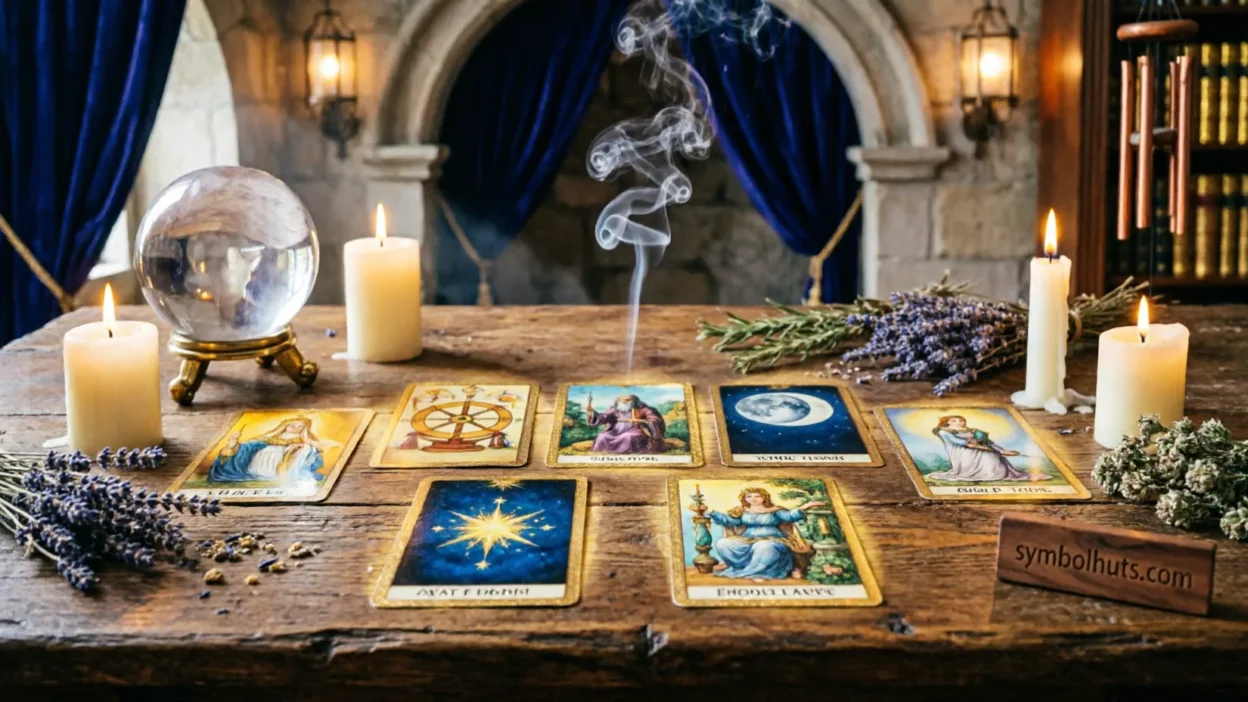
Tarot symbolism has fascinated people for centuries because of its rich imagery, spiritual depth, and ability to inspire self-reflection.
Every card in a tarot deck contains symbols that communicate messages about life, personal growth, emotions, challenges, and opportunities.
If used for meditation, spiritual exploration, or artistic appreciation, tarot symbolism offers layers of meaning that continue to captivate people around the world.
Tarot Symbolism Meaning (Clear Definition)
Tarot symbolism refers to the collection of images, colors, numbers, characters, and archetypal themes found within tarot cards. These symbols are designed to convey deeper meanings that help individuals understand experiences, emotions, and life situations.
In simple terms, tarot symbolism acts as a visual language. Each symbol represents concepts such as transformation, wisdom, balance, intuition, love, or personal growth.
Common Tarot Symbol Meanings
| Symbol | Meaning |
|---|---|
| The Sun | Success, clarity, joy |
| The Moon | Intuition, mystery, illusion |
| The Star | Hope, inspiration, guidance |
| The Fool | New beginnings, adventure |
| The Tower | Sudden change, awakening |
| Water | Emotions, subconscious mind |
| Sword | Truth, intellect, decisions |
| Rose | Beauty, spiritual growth |
What Does Tarot Symbolism Represent?
Tarot symbolism represents the journey of human experience. The symbols found in tarot cards often reflect universal themes that people encounter throughout life.
Some common representations include:
- Personal transformation
- Spiritual awakening
- Inner wisdom
- Emotional healing
- Life lessons
- Decision-making
- Balance between opposing forces
- Self-discovery
Many tarot practitioners view the cards as mirrors of the subconscious mind, helping individuals recognize patterns, strengths, and opportunities for growth.
Spiritual Meaning of Tarot Symbolism
The spiritual meaning of tarot symbolism centers on self-awareness and enlightenment. Tarot symbols often encourage individuals to look beyond surface-level events and explore deeper truths.
Certain spiritual themes frequently appear in tarot imagery:
- Divine guidance
- Soul growth
- Inner intuition
- Karmic lessons
- Personal transformation
- Connection with higher consciousness
For example, The Hermit symbolizes spiritual wisdom gained through reflection, while The Star represents hope and divine inspiration after difficult experiences.
Many people use tarot symbolism as a tool for meditation and spiritual development rather than fortune-telling.
Biblical / Religious Meaning of Tarot Symbolism
Tarot symbolism does not originate from the Bible and is generally separate from traditional Christian teachings. Some religious traditions view tarot cautiously because it is often associated with divination practices.
However, others interpret tarot imagery symbolically rather than predictively. Certain themes found in tarot cards overlap with religious concepts, including:
- Wisdom
- Faith
- Justice
- Compassion
- Redemption
- Moral choices
From a symbolic perspective, tarot imagery can inspire reflection on ethical decisions and spiritual growth, although interpretations vary among religious communities.
Tarot Symbolism in History and Culture
Tarot symbolism has evolved over hundreds of years. The earliest tarot decks appeared in Europe during the fifteenth century and were originally used as playing cards.
Over time, tarot imagery became associated with mysticism, philosophy, and spiritual exploration. Various cultures and traditions contributed additional symbolic meanings to the cards.
Historical Influences on Tarot Symbolism
- Medieval European art
- Renaissance philosophy
- Astrology symbolism
- Numerology meanings
- Mythological archetypes
- Spiritual traditions
As tarot spread worldwide, its symbols gained new interpretations while maintaining many of their original themes.
Tarot Symbolism in Literature and Art
Tarot symbolism has inspired countless artists, writers, and creative thinkers. The rich visual imagery of tarot cards makes them powerful artistic tools for storytelling.
In literature, tarot symbols often represent:
- Fate and destiny
- Personal journeys
- Hidden truths
- Transformation
- Psychological growth
Artists frequently draw inspiration from tarot archetypes such as The Magician, The Empress, and Death to explore complex human emotions and experiences.
Because tarot imagery is highly symbolic, it continues to influence modern paintings, illustrations, films, and novels.
Dream Meaning of Tarot Symbolism
Seeing tarot symbolism in dreams often suggests a desire for guidance, self-understanding, or clarity about an important situation.
Dream interpretations may vary depending on the card or symbol that appears.
Common Dream Interpretations
- Tarot cards appearing unexpectedly may indicate hidden insights.
- The Fool may symbolize a new life chapter.
- The Star may represent hope and healing.
- The Moon may suggest uncertainty or intuition.
- The Tower may signal significant personal change.
Dreams involving tarot symbolism often encourage deeper reflection on current life circumstances and emotions.
Modern Meaning of Tarot Symbolism
Today, tarot symbolism is widely used for personal development, mindfulness, and self-reflection. Many people appreciate tarot as a psychological and spiritual tool rather than a method of predicting the future.
Modern interpretations often focus on:
- Emotional awareness
- Personal empowerment
- Goal setting
- Mindfulness practices
- Creative inspiration
- Self-discovery
The enduring popularity of tarot symbolism comes from its ability to provide meaningful insights through universally recognizable archetypes.
Key Symbolic Themes Found in Tarot
Several recurring themes appear throughout tarot symbolism:
- Transformation and change
- Wisdom and knowledge
- Balance and harmony
- Intuition and insight
- Hope and inspiration
- Challenge and growth
- Spiritual awakening
These themes help explain why tarot remains relevant across different cultures and generations.
FAQs:
What is the main purpose of tarot symbolism?
Tarot symbolism helps communicate deeper meanings through images and archetypes, encouraging self-reflection and personal understanding.
Is tarot symbolism spiritual?
Many people view tarot symbolism as spiritual because it explores intuition, personal growth, and deeper aspects of human experience.
Does tarot symbolism predict the future?
Most modern interpretations see tarot symbolism as a tool for insight and reflection rather than a guaranteed prediction of future events.
Why are symbols important in tarot cards?
Symbols create a visual language that conveys complex ideas, emotions, and life lessons in an easily recognizable form.
What do the Major Arcana symbolize?
The Major Arcana symbolizes significant life lessons, spiritual growth, personal transformation, and important stages of the human journey.
Conclusion
Tarot symbolism combines wisdom, archetypes, and spiritual insight into a powerful symbolic language.
Through its timeless imagery, tarot continues to inspire self-discovery, reflection, and personal growth across generations.

Noah Peter is a talented writer and researcher at SymbolHuts.com. She focuses on symbols, their meanings, and visual communication, delivering clear, engaging content. With a passion for design and creative expression, Noah empowers readers to understand symbolism, interpret visuals confidently, and connect ideas effectively in everyday life and digital spaces.