Have you ever written nitch vs niche and suddenly wondered which spelling is correct? You are not alone. These two words look almost identical, and the pronunciation can make the spelling even more confusing.
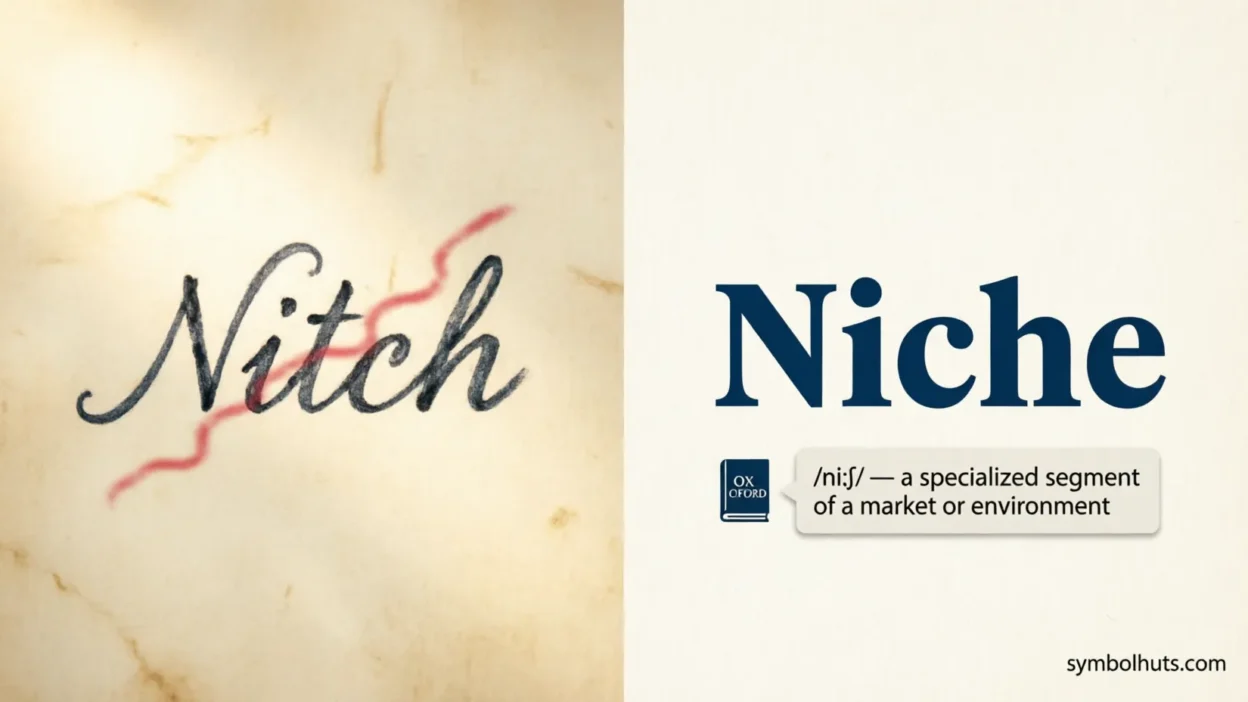
The good news is that the difference is simple: niche is the correct standard spelling, while nitch is generally considered a misspelling in modern English. In this guide, we will explain the meaning, pronunciation, usage, examples, and common mistakes so you can confidently choose the right word every time.
Quick Answer: Nitch vs Niche
Niche is the correct spelling. It can refer to a specialized role, market, interest, or suitable position. Nitch is usually an incorrect spelling of niche and should generally be avoided in formal writing.
Correct: She found a profitable niche in the online education market.
Incorrect: She found a profitable nitch in the online education market.
Nitch vs Niche: Which Spelling Is Correct?
When comparing nitch vs niche, niche is the standard and accepted spelling in modern English.
The word niche is used in everyday English, business, marketing, biology, and general conversation. You may hear or see it when people talk about a specialized market, a specific interest, or a particular role.
Nitch, on the other hand, is commonly a spelling mistake caused by the way some people pronounce the word or by confusion with similar words. Although you may occasionally find “nitch” in informal writing or online searches, niche is the spelling you should use.
Niche Meaning: What Does Niche Mean?
The word niche has several related meanings, but the central idea is a specialized place, role, or area that suits a person, group, product, or thing.
Common meanings of niche include:
- A specialized area of interest
- A specific market or customer group
- A suitable position or role
- A place or role occupied by an organism in an ecosystem
In simple English, a niche is a specific area where something or someone fits well.
Example:
She created a successful niche for herself as a travel writer.
Here, niche means a specialized area or role.
Nitch Meaning: Is Nitch a Word?
This is where the nitch vs niche confusion often begins.
Nitch is not the standard spelling used for the common meanings of niche. In most cases, if you write “nitch,” you probably mean niche.
Some dictionaries and historical sources may record rare, regional, or specialized uses of similar spellings. However, for modern standard English, “nitch” is not the normal choice when referring to a specialized market, role, or area.
The easiest rule to remember:
If you mean a specialized area, market, or role, write niche—not nitch.
Niche Examples in Sentences
Seeing the correct word in context can make the difference much easier to remember.
Examples of “niche”:
- She found her niche in digital marketing.
- This company serves a very specific niche market.
- He has created a niche for himself as a technology reviewer.
- The store sells products for a niche audience.
- Every species has a unique ecological niche.
- Her handmade jewelry business occupies a profitable niche.
- The blog focuses on a small but loyal niche.
- He finally discovered a career niche that matched his skills.
Notice that niche works naturally in business, careers, blogging, science, and personal interests.
Nitch vs Niche Comparison Table
| Feature | Nitch | Niche |
|---|---|---|
| Standard spelling | Usually incorrect | Correct |
| Common modern usage | Very rare | Very common |
| Meaning | Usually intended as “niche” | Specialized area, role, or market |
| Used in business | No | Yes |
| Used in biology | No | Yes |
| Recommended in formal writing | No | Yes |
| Example | Incorrect: a profitable nitch | Correct: a profitable niche |
How Do You Pronounce Niche?
Pronunciation is one of the biggest reasons people search for nitch vs niche.
The word niche has two widely recognized pronunciations:
- /niːʃ/ — sounds like “neesh”
- /nɪtʃ/ — sounds like “nitch”
Because one accepted pronunciation sounds like “nitch,” many people assume the spelling should also be nitch. However, the standard spelling remains niche.
A helpful memory tip
Think of it this way:
You may say “nitch,” but you should spell “niche.”
This simple rule can help you avoid the most common spelling mistake.
American vs British English: Nitch vs Niche
Are there American and British English differences in nitch vs niche?
The main difference is usually pronunciation rather than spelling.
In both American and British English, niche is the standard spelling. However, speakers may use different pronunciations depending on region, education, and personal preference.
The “neesh” pronunciation is widely recognized, while the “nitch” pronunciation is also heard in English-speaking communities.
Important point:
American English and British English both use “niche” as the standard spelling.
So, this is not mainly a US vs UK spelling difference like color and colour. The confusion is primarily about pronunciation and spelling.
Why Do People Spell Niche as Nitch?
There are a few common reasons people write nitch instead of niche.
1. Pronunciation confusion
If someone hears the word pronounced “nitch,” they may naturally spell it the same way.
2. Sound-based spelling
English spelling is not always phonetic. Many words sound different from the way they are written, and niche is a good example.
3. Typing mistakes
People often type quickly and choose the spelling that seems familiar. This can lead to nitch appearing in informal messages, blogs, or online comments.
4. Confusion with similar words
Words such as notch and nitch may create additional spelling confusion. However, niche is the correct word for a specialized area or market.
Common Mistakes to Avoid
Understanding nitch vs niche is easier when you know the mistakes people commonly make.
Mistake 1: Writing “nitch market”
Incorrect: We found a profitable nitch market.
Correct: We found a profitable niche market.
Mistake 2: Assuming pronunciation determines spelling
Just because a word sounds like “nitch” does not mean it should be spelled that way.
Mistake 3: Using “niche” without understanding its meaning
Some people use niche as a trendy business word without knowing what it means. A niche is not simply “anything specific.” It usually refers to a specialized area, role, audience, or market.
Mistake 4: Confusing a niche with a general market
A broad market includes many types of customers. A niche market focuses on a more specific audience with particular needs or interests.
Niche in Business, Blogging, and Marketing
The word niche is especially common in online business and digital marketing.
A niche market is a focused part of a larger market. For example, “fitness” is a broad industry. Fitness for busy mothers over 40 is a more specific niche.
More niche examples:
- General topic: Food
Niche: Vegan meal planning - General topic: Travel
Niche: Budget travel for solo students - General topic: Fashion
Niche: Sustainable clothing for petite women - General topic: Technology
Niche: Productivity apps for freelancers
Finding a niche can help a business or content creator connect with a clearly defined audience. That is why niche marketing, niche blogging, and niche websites are common terms today.
Niche in Biology and Science
The word niche also has an important scientific meaning.
In ecology, an organism’s ecological niche refers to its role and position within an ecosystem. This can include how it uses resources, where it lives, and how it interacts with other organisms.
Example:
Bees occupy an important ecological niche because they help pollinate many plants.
Here, niche does not mean a business market. It refers to a role within an environment.
This scientific meaning is another reason why using the correct spelling matters.
Quick Memory Trick: Nitch or Niche?
Still unsure about nitch vs niche?
Use this simple memory trick:
“Niche” has “che” at the end—choose it when you mean a specialized area.
You can also remember:
Niche = specialized space.
Whether you are talking about a business niche, career niche, blogging niche, or ecological niche, the spelling is niche.
FAQs About Nitch vs Niche
Is “nitch” a correct spelling?
In standard modern English, nitch is generally considered an incorrect spelling when you mean niche. Use niche for a specialized area, role, or market.
Is niche pronounced “nitch” or “neesh”?
Both “nitch” and “neesh” pronunciations are commonly heard. However, the spelling is always niche in standard usage.
What is the difference between nitch and niche?
Niche is the correct standard spelling. Nitch is usually a misspelling caused by pronunciation confusion.
Is niche American or British English?
Niche is used in both American and British English. The spelling does not change between the two varieties.
What is a niche market?
A niche market is a specialized section of a larger market that focuses on a particular audience or set of needs.
Can I use “niche” for a person?
Yes. You can say someone has found their niche when they have discovered a suitable role, career, or area where they fit well.
What is an example of a niche?
A website about budget travel for solo students is an example of a niche because it targets a specific topic and audience.
Why do people write “nitch”?
People often write nitch because the word can be pronounced “nitch.” However, the standard spelling is niche.
Summary
When comparing nitch vs niche, the correct spelling is niche. It means a specialized area, role, market, interest, or position. Although “nitch” may appear because of pronunciation confusion, it is generally not the spelling you should use in standard English.
The word niche is used in American and British English, and both varieties may use different pronunciations. If you are writing about marketing, blogging, careers, or ecology, choosing niche will keep your writing accurate, clear, and professional.
Actionable Takeaway
Remember this simple rule: if you mean a specialized area or market, always spell it “niche,” not “nitch.”

Christian Jeremy is a creative content writer and digital strategist at SymbolHuts.com. She specializes in exploring symbols, meanings, and visual communication, providing insightful and engaging content. With a passion for design and language, Christian helps readers understand symbolism, improve visual literacy, and connect with ideas in a clear and inspiring way.