Have you ever typed simular vs similar and suddenly wondered which spelling is correct? You are not alone. This is a common spelling confusion because both words look almost identical and sound very similar when spoken.
The good news is that the answer is simple: similar is the correct English spelling, while simular is a misspelling in standard English. In this guide, we will explain the difference clearly, show real examples, highlight common mistakes, and give you an easy way to remember the correct word.
Quick Answer: Simular vs Similar
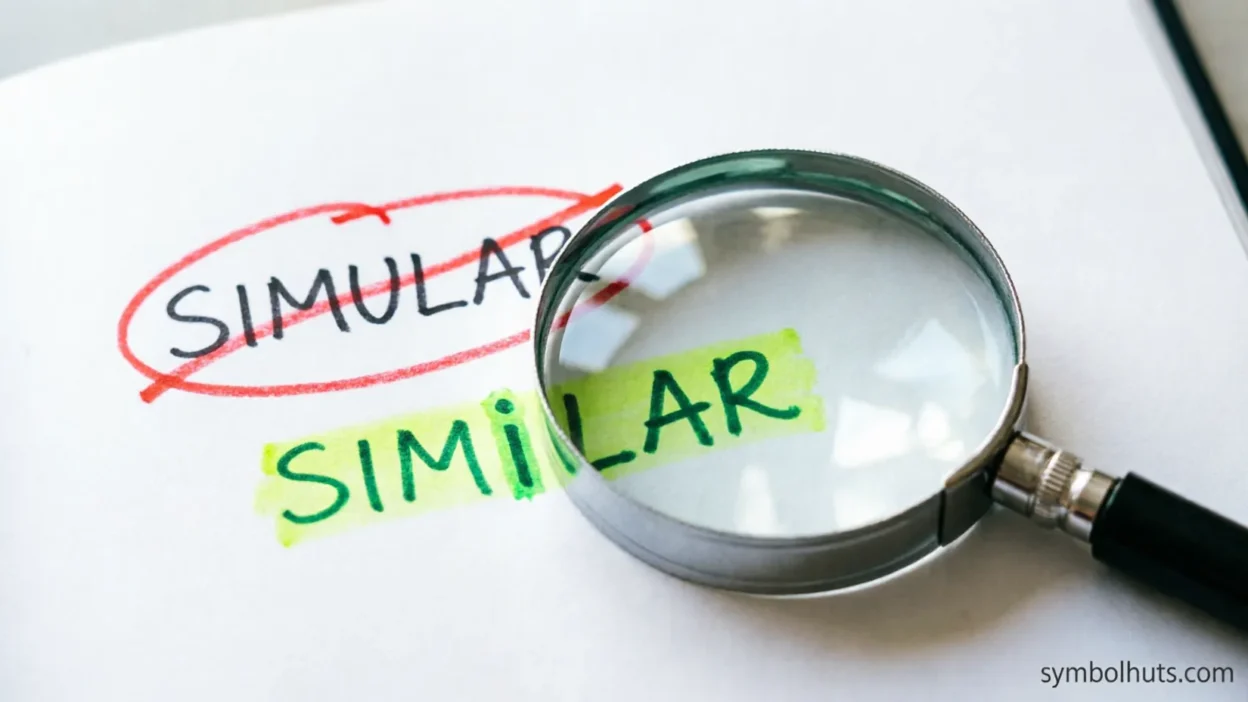
Similar is the correct spelling and means “almost the same” or “alike in some way.”
Simular is generally an incorrect spelling of similar and should not be used in standard American or British English.
| Word | Correct? | Meaning |
|---|---|---|
| Similar | ✅ Yes | Almost the same or alike |
| Simular | ❌ No | Common misspelling of similar |
Example:
The two houses have a similar design.
Simular vs Similar: What Is the Difference?
The main difference between simular vs similar is that similar is a real and correctly spelled English word, while simular is usually a spelling error.
Similar is an adjective used to describe people, objects, ideas, or situations that share qualities or characteristics. They do not have to be exactly the same. They simply have something in common.
For example:
- The twins have similar personalities.
- These two phones have similar features.
- Her dress is similar to mine.
On the other hand, simular is not the standard spelling of this word. People often write it by mistake because the pronunciation of similar can make the spelling feel less obvious.
The Simple Rule
If you mean “alike” or “almost the same,” always write similar.
Similar Meaning and Definition
The word similar means resembling someone or something in appearance, quality, nature, or characteristics.
In simple English, similar means “nearly the same, but not exactly identical.”
Similar as an Adjective
Similar is an adjective.
Definition:
Almost the same as another person or thing in some important way.
Examples of Similar in a Sentence
- My brother and I have similar interests.
- The two products are similar in quality.
- This problem is similar to the one we solved yesterday.
- She chose a similar color for the walls.
- The students had similar answers.
The word can describe appearance, behavior, ideas, features, results, or experiences.
Why Do People Write Simular Instead of Similar?
The simular vs similar spelling confusion usually happens because of pronunciation and word patterns.
When people say similar, the middle sounds can be less clear in everyday speech. Depending on a person’s accent and speaking speed, the word may sound like “sim-uh-lar.” This can lead some writers to incorrectly add a u and spell it simular.
Another reason is that English contains many words with different vowel patterns. For example, words such as regular, particular, and popular may influence how someone guesses the spelling of similar.
Common Reasons for the Mistake
- Confusing the pronunciation with the spelling
- Typing quickly
- Relying on phonetic spelling
- Forgetting that similar contains “simil”
- Autocorrect or search suggestions creating confusion
Spelling mistakes like this are completely understandable. The important thing is learning the correct pattern and using it consistently.
Similar Examples: How to Use the Correct Word
Here are several natural examples showing how to use similar correctly.
Example 1: Talking About Appearance
The two paintings have a similar style.
This means the paintings look alike in some way.
Example 2: Talking About People
Sarah and Emily have similar personalities.
Their personalities share certain qualities.
Example 3: Talking About Ideas
Your idea is similar to mine.
The two ideas are alike but may not be exactly the same.
Example 4: Talking About Products
This laptop has similar features to the more expensive model.
The features are alike or comparable.
Example 5: Talking About Experiences
We had a similar experience during our trip.
The experiences had important things in common.
Example 6: Talking About Situations
The company faced a similar problem last year.
The problem was alike in nature or type.
Simular vs Similar Comparison Table
| Feature | Similar | Simular |
|---|---|---|
| Spelling | Correct | Incorrect in standard English |
| Part of speech | Adjective | Not standard English |
| Meaning | Almost the same or alike | No accepted standard meaning as the intended word |
| American English | Correct | Misspelling |
| British English | Correct | Misspelling |
| Example | The colors are similar. | ❌ The colors are simular. |
The table makes the answer to simular vs similar clear: similar is the word you should use.
Common Mistakes with Simular vs Similar
Even though the correction is simple, this spelling mistake appears often in casual writing, schoolwork, emails, and online content.
Mistake 1: Writing “Simular”
❌ These two books are simular.
✅ These two books are similar.
Simular is a common misspelling. Always check the middle of the word and remember similar = s-i-m-i-l-a-r.
Mistake 2: Thinking Similar Means Exactly the Same
The word similar does not mean identical.
For example:
- Similar: The two cars have similar designs.
- Identical: The two documents are identical.
If two things are similar, they share qualities. They can still have important differences.
Mistake 3: Using “Similar With”
In standard English, similar to is the usual and preferred phrase.
❌ This color is similar with that one.
✅ This color is similar to that one.
Mistake 4: Confusing Similar and Familiar
These words are different.
- Similar = alike
- Familiar = known or recognized
Example:
The design is similar to mine.
Her face looks familiar.
Similar vs Same: Are They the Same?
No. Similar and same have related meanings, but they are not interchangeable.
Similar means alike in some ways.
Same means identical or not different in the relevant way.
Compare These Examples
- The two shirts are similar.
→ They look alike, but they may have differences. - The two shirts are the same.
→ They are identical or considered identical for the situation.
Understanding this difference can help you use similar more accurately in everyday English.
American vs British English: Is Similar Spelled Differently?
No. Similar is spelled the same in both American English and British English.
There is no American vs British spelling difference for this word.
Whether you are writing for a U.S. audience or a British audience, the correct spelling is:
similar
The incorrect form simular is not the standard spelling in either variety of English.
This is useful to remember because some English words do have regional spelling differences, such as color/colour and favorite/favourite. However, similar is not one of them.
How to Remember the Spelling of Similar
A simple spelling trick can help you avoid the simular vs similar mistake.
Remember “SIMILAR = SIMILARITY”
The word similar is connected to similarity.
Notice the shared beginning:
SIMILAR → SIMILARITY
If you remember similarity, it becomes easier to remember that the correct spelling is similar, not simular.
Easy Memory Sentence
“Similar things are similar in spelling.”
Just remember the pattern:
S-I-M-I-L-A-R
The word has “simil” in the middle.
FAQs:
1. Is simular a correct English word?
No. Simular is generally an incorrect spelling of similar in standard English. If you mean “almost the same,” use similar.
2. What is the correct spelling: simular or similar?
Similar is the correct spelling. Simular is a common spelling mistake.
3. What does similar mean?
Similar means alike or almost the same in some way. For example, two people can have similar interests.
4. Is similar spelled differently in American and British English?
No. Similar has the same spelling in American and British English.
5. Why do people spell similar as simular?
People often make this mistake because of pronunciation. The word can sound less clear when spoken quickly, causing people to guess the spelling incorrectly.
6. Can I use similar to describe people?
Yes. You can say that people have similar personalities, interests, appearances, or opinions.
7. Is similar the same as identical?
No. Similar means alike, while identical means exactly the same or matching in every relevant detail.
8. What preposition is used with similar?
The most common phrase is similar to.
Example: This phone is similar to my old one.
Summary
When comparing simular vs similar, the answer is straightforward: similar is the correct English word. It means alike, resembling, or almost the same in some way. The spelling simular is generally a common misspelling and should be avoided in formal, academic, and professional writing.
There is no difference between American and British English when it comes to spelling similar. To remember it, focus on the “simil” pattern and connect the word with similarity. Whenever you mean “alike,” choose similar with confidence.
Actionable Takeaway
Remember: “Similar” is correct, “simular” is a misspelling—use “similar to” when describing things that are alike.

Walter Terry is a skilled content creator and symbol researcher at SymbolHuts.com. He specializes in explaining symbols, their meanings, and visual communication in a clear, engaging way. Walter’s insightful content helps readers interpret visuals, understand symbolism, and connect ideas effectively across digital, educational, and creative contexts.