Have you ever typed presense and wondered if it was actually correct?
You’re not alone. Many English learners and even native speakers accidentally confuse presense vs presence because the words sound almost identical. However, only one spelling is accepted in standard English.
In this guide, you’ll learn the difference between presense vs presence, discover why the mistake happens, see real-life examples, avoid common spelling errors, and gain confidence in using the correct word in writing.
If you’re writing emails, essays, blog posts, or social media captions, this article will help you choose the right spelling every time.
Quick Answer
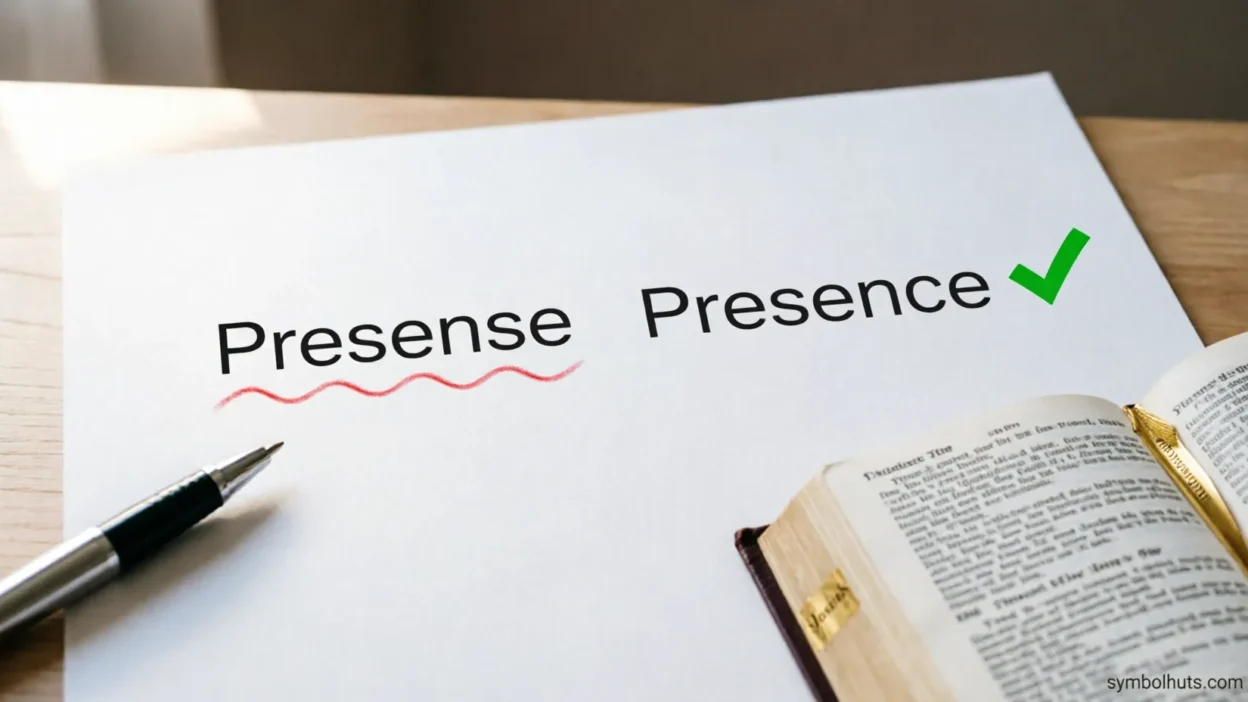
Presence is the correct spelling in English.
Presense is a misspelling and is not recognized as a standard English word.
- ✅ Correct: Presence
- ❌ Incorrect: Presense
If you want to describe someone’s existence, attendance, influence, or the feeling that someone or something is nearby, always use presence.
Presense vs Presence: What’s the Difference?
The difference between presense vs presence is simple.
| Word | Correct? | Meaning |
|---|---|---|
| Presence | ✅ Yes | The state of being present, nearby, or existing in a place |
| Presense | ❌ No | Incorrect spelling of presence |
Although both spellings may appear similar, dictionaries, style guides, and grammar experts only recognize presence as the proper spelling.
Meaning of Presence
Presence is a noun that refers to:
- Being physically present somewhere
- Existing in a particular place
- Someone’s influence or aura
- Calm confidence or authority
- Attendance at an event
Depending on the context, presence can describe both physical and emotional situations.
Examples
- Her presence made everyone feel comfortable.
- The teacher noticed his presence in class.
- The company’s online presence continues to grow.
- Police presence increased after the event.
- Your presence is requested at the meeting.
Why Do People Write “Presense”?
The spelling presense is a very common typo.
People often spell it this way because English pronunciation can be misleading. The ending of presence sounds similar to words ending in -sense, making many writers assume the spelling should follow that pattern.
However, presence comes from the Latin word praesentia, which is why it ends in -ence rather than -ense.
A simple way to remember it is:
Since absence and presence are opposite words, remembering that they share the same ending makes the spelling easier.
Examples of Presence in Sentences
Here are some everyday examples showing the correct use of presence.
- Her calming presence helped everyone relax.
- We appreciate your presence at today’s ceremony.
- The doctor’s presence reassured the patients.
- Social media presence is important for modern businesses.
- His presence was immediately noticed.
- The security team’s presence prevented problems.
- Your presence means a lot to our family.
- The audience enjoyed the speaker’s energetic presence.
Notice that presense would be incorrect in every one of these examples.
Common Mistakes with Presense vs Presence
Many writers make predictable mistakes when using this word.
Mistake 1: Using “Presense”
❌ I enjoyed your presense.
✅ I enjoyed your presence.
Mistake 2: Spell Check Doesn’t Always Catch It
Some writing platforms may not immediately flag the error if autocorrect is disabled. Always proofread important documents.
Mistake 3: Confusing Pronunciation with Spelling
Many English words do not spell exactly as they sound. This is one of them.
Easy Memory Trick
Here’s an easy trick to remember the correct spelling.
Think of these two opposite words:
- Presence
- Absence
Both end with -ence.
If you can spell absence, you can easily remember presence.
Another helpful reminder is:
You are “present,” so you have “presence.”
Both words share the same root.
Presence in Different Contexts
The word presence appears in many situations.
Physical Presence
Someone is physically in a place.
Example:
- Employee presence is required every Monday.
Personal Presence
A person’s confidence or charisma.
Example:
- She has a strong stage presence.
Online Presence
A brand or person’s visibility on the internet.
Example:
- Businesses need a professional online presence.
Spiritual Presence
A feeling that a divine or spiritual being is nearby.
Example:
- Many people describe feeling God’s presence during prayer.
Business Presence
A company’s operations in different markets.
Example:
- The company has a global presence.
Presense vs Presence in American and British English
Good news—there is no difference between American and British English for this word.
| English Variant | Correct Spelling |
|---|---|
| American English | Presence |
| British English | Presence |
| Australian English | Presence |
| Canadian English | Presence |
Unlike words such as color/colour or center/centre, presence has only one accepted spelling across all major English varieties.
Words Commonly Confused with Presence
Because of similar pronunciation, people often confuse presence with these words.
| Word | Meaning |
|---|---|
| Present | Existing now or currently here |
| Presence | State of being present |
| Presents | Gifts or the third-person form of present |
| Essence | The fundamental nature of something |
| Absence | The state of not being present |
Learning these related words helps improve spelling accuracy.
Tips to Avoid This Spelling Mistake
Use these simple strategies.
- Remember that presence ends with -ence.
- Associate it with absence.
- Read your writing aloud during proofreading.
- Enable spell checking in your writing software.
- Practice writing the word in complete sentences.
- Read more professionally edited English content.
Consistent reading and writing naturally improve spelling over time.
FAQs:
Is presense a real English word?
No. Presense is not recognized in standard English dictionaries. It is considered a misspelling of presence.
Which spelling is correct: presense or presence?
Presence is the only correct spelling.
Why do people spell presence incorrectly?
The pronunciation makes many people think the ending should be -sense, leading to the common misspelling presense.
Does British English use presense?
No. British English also uses presence.
Is presence a noun?
Yes. Presence is a noun referring to the state of being present, existing, or having influence.
What is an online presence?
An online presence refers to how a person or business appears across websites, social media, search engines, and other digital platforms.
How can I remember the correct spelling?
Think of the pair presence and absence. Since both end with -ence, it’s much easier to remember the correct spelling.
Summary
The debate over presense vs presence has a straightforward answer: presence is the only correct spelling, while presense is simply a spelling mistake.
If you’re referring to someone’s attendance, influence, physical location, professional image, or digital footprint, presence is always the word you should use.
Both American and British English follow the same spelling, making it consistent across all major varieties of English.
The best way to avoid this common error is to remember that presence ends with -ence, just like absence. Practice using the word in everyday writing, proofread carefully, and rely on trusted dictionaries when you’re unsure.
Building this habit will improve your spelling accuracy and make your writing look more polished and professional.

Walter Terry is a skilled content creator and symbol researcher at SymbolHuts.com. He specializes in explaining symbols, their meanings, and visual communication in a clear, engaging way. Walter’s insightful content helps readers interpret visuals, understand symbolism, and connect ideas effectively across digital, educational, and creative contexts.