If you’ve ever wondered whether adict or addict is the correct spelling, you’re not alone.
Many English learners and even native speakers occasionally confuse these two words because they look and sound similar. However, only one spelling is accepted in standard English.
Understanding the difference is important for writing professionally, avoiding spelling mistakes, and improving your English vocabulary.
In this guide, you’ll learn the correct spelling, meaning, examples, common mistakes, and simple tips to remember the right word every time.
Quick Answer
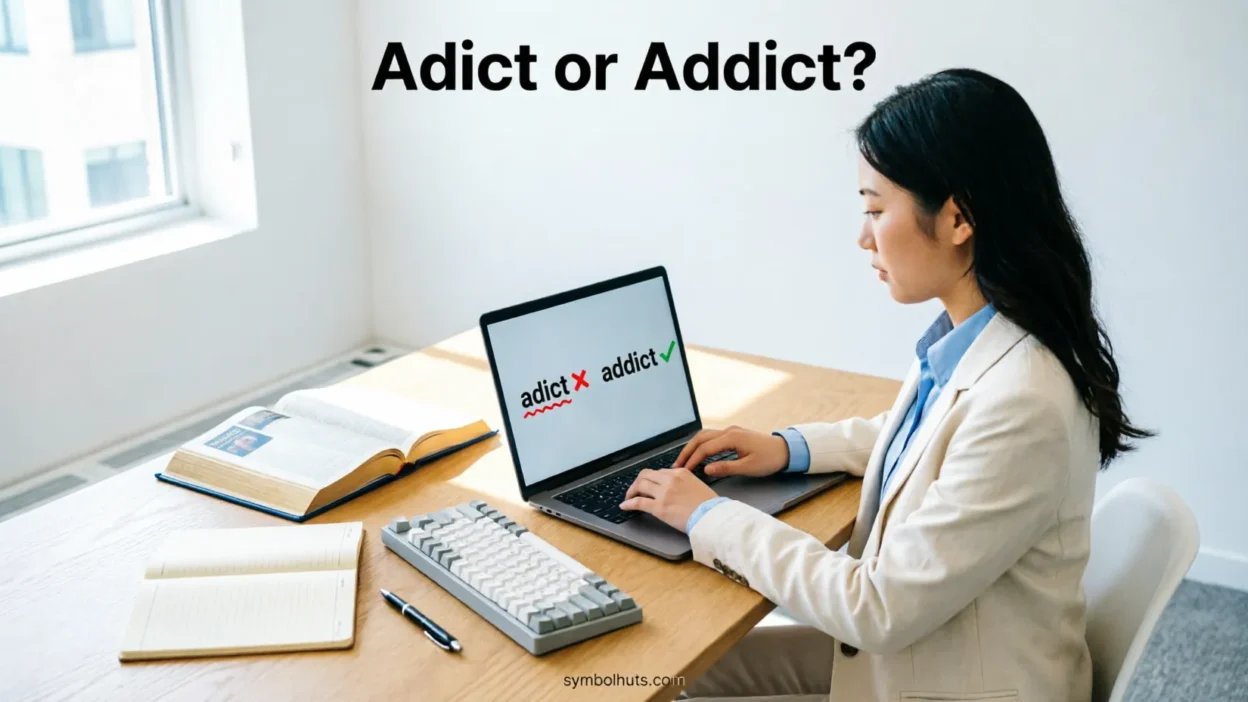
The correct spelling is addict.
- ✅ Addict = Correct spelling
- ❌ Adict = Incorrect spelling
Whether you’re referring to someone dependent on a substance or someone who is extremely enthusiastic about something, addict is always the correct word.
Is It Adict or Addict?
The confusion between adict or addict comes from the double d in the correct spelling.
English contains many words with double consonants, and addict is one of them. The spelling adict is simply a typo or misspelling and is not recognized in dictionaries.
Examples:
- ✅ He became an addict after years of substance abuse.
- ✅ She’s a coffee addict.
- ❌ He became an adict.
Whenever you’re writing, always choose addict.
What Does Addict Mean?
The word addict has two primary meanings.
As a Noun
An addict is a person who is unable to stop using a substance or repeatedly engaging in a behavior.
Examples:
- He is a recovering alcohol addict.
- The organization helps drug addicts rebuild their lives.
- She sought treatment after becoming an addict.
As an Informal Noun
The word is also used informally for someone who loves something very much.
Examples:
- I’m a chocolate addict.
- He’s a fitness addict.
- She’s a travel addict.
In casual conversation, this meaning usually refers to strong enthusiasm rather than a medical condition.
Addict as a Verb
Addict can also be used as a verb, although it is less common.
Meaning:
To cause someone to become dependent on something.
Examples:
- Certain drugs can addict users quickly.
- Social media platforms can addict people to constant scrolling.
Today, people more commonly say:
- Become addicted
- Be addicted to
Example:
- She became addicted to online gaming.
Comparison Table: Adict vs Addict
| Word | Correct? | Meaning |
|---|---|---|
| Addict | ✅ Yes | A person dependent on something or extremely enthusiastic about it |
| Adict | ❌ No | Incorrect spelling with no dictionary meaning |
The comparison is simple: addict is always correct, while adict should never be used.
Why Do People Spell It as Adict?
Several factors cause this spelling mistake.
1. Missing Double Letters
Many English words contain double consonants that people accidentally shorten.
Examples:
- accommodate
- address
- recommend
- success
- addict
2. Fast Typing
Typing quickly often leads to dropping one of the repeated letters.
3. Pronunciation
When spoken naturally, the double d isn’t strongly emphasized, making it easy to forget while writing.
4. English Learners
People learning English often simplify spellings until they become familiar with common patterns.
Examples of Addict in Sentences
Here are examples showing correct usage.
Medical Context
- The rehab center helps every recovering addict.
- Drug addicts deserve compassion and proper treatment.
- He admitted he was an addict and sought help.
Everyday Conversation
- I’m a book addict.
- She’s a movie addict.
- He’s a coffee addict.
- My brother is a technology addict.
- Sarah is a music addict.
Professional Writing
- Addiction specialists support addicts through recovery.
- Early treatment improves outcomes for many addicts.
Common Mistakes to Avoid
People frequently make these errors.
Writing “Adict”
Incorrect:
- She is a coffee adict.
Correct:
- She is a coffee addict.
Forgetting the Double D
Remember that addict always contains two d letters.
Using the Word Insensitively
Although phrases like “Netflix addict” or “coffee addict” are common, avoid joking about addiction when discussing real medical conditions.
Respectful language is especially important in healthcare, education, and professional communication.
Easy Memory Trick
Here’s a simple way to remember the spelling.
Think of the word add.
Addict begins with add.
Add + ict = Addict
Since the word starts with add, it naturally contains two d letters.
If you remember add, you’ll almost never write adict again.
Related Words
Learning related vocabulary helps reinforce the correct spelling.
- Addiction
- Addictive
- Addicted
- Dependency
- Dependence
- Recovery
- Rehabilitation
- Habit
- Obsession
- Craving
- Compulsion
- Substance abuse
These LSI keywords help you understand the topic more completely while improving your vocabulary.
American vs British English
There is no spelling difference between American and British English.
| American English | British English |
|---|---|
| Addict | Addict |
| Addiction | Addiction |
| Addicted | Addicted |
| Addictive | Addictive |
Unlike words such as color/colour or center/centre, the spelling addict remains exactly the same in both varieties of English.
When Should You Use “Addict”?
Use addict when referring to:
- Someone dependent on drugs or alcohol
- Someone recovering from addiction
- A person strongly devoted to a hobby
- Someone enthusiastic about food, fitness, gaming, books, or travel
Examples:
- He’s a photography addict.
- She’s a recovering addict.
- My cousin is a gaming addict.
- I’m a coffee addict.
- They help addicts begin recovery.
Synonyms for Addict
Depending on the context, alternatives include:
- Enthusiast
- Fan
- Devotee
- Lover
- Supporter
- Follower
- Dependent person
- Habitual user
- Compulsive user
Choose the synonym that best fits your intended meaning.
FAQs:
Is adict a real English word?
No. Adict is an incorrect spelling and does not appear in standard English dictionaries.
Which spelling is correct: adict or addict?
Addict is always the correct spelling.
Why does addict have two d’s?
The word derives from Latin and has traditionally been spelled with a double d in English.
Can addict be used for hobbies?
Yes. Informally, people say things like “book addict,” “travel addict,” or “coffee addict” to describe strong enthusiasm.
Is addict both a noun and a verb?
Yes. It can function as both, although the noun form is much more common.
Is addict offensive?
Not necessarily. However, in medical or professional settings, many people prefer person-first language such as “person with an addiction” or “person experiencing substance use disorder.”
Is there any American or British spelling difference?
No. Both American and British English use addict.
How can I remember the correct spelling?
Remember that addict begins with add, so it always contains two d letters.
Summary
When comparing adict or addict, the answer is straightforward: addict is the only correct spelling.
The version adict is a common misspelling caused by omitting one of the double d letters. Whether you’re writing about addiction, recovery, or someone who simply loves coffee or books, addict is the correct choice in every situation.
Using the right spelling improves your writing, builds credibility, and helps you communicate clearly.
If you’re unsure, remember the simple trick that addict starts with add. Proofread your work, rely on spell-check tools, and practice using the word in sentences to make the correct spelling second nature.

Walter Terry is a skilled content creator and symbol researcher at SymbolHuts.com. He specializes in explaining symbols, their meanings, and visual communication in a clear, engaging way. Walter’s insightful content helps readers interpret visuals, understand symbolism, and connect ideas effectively across digital, educational, and creative contexts.