Have you ever paused while writing because you weren’t sure whether to use possess or posses? You’re not alone.
These two words look very similar, but only one is correct in most everyday writing. A single missing letter can completely change the meaning of your sentence and make your writing appear less polished.
In this guide, you’ll learn the difference between possess vs posses, discover why people often confuse them, see plenty of examples, avoid common spelling mistakes, and remember the correct form with an easy trick.
If you’re a student, writer, or English learner, this guide will help you use the right word confidently.
Quick Answer
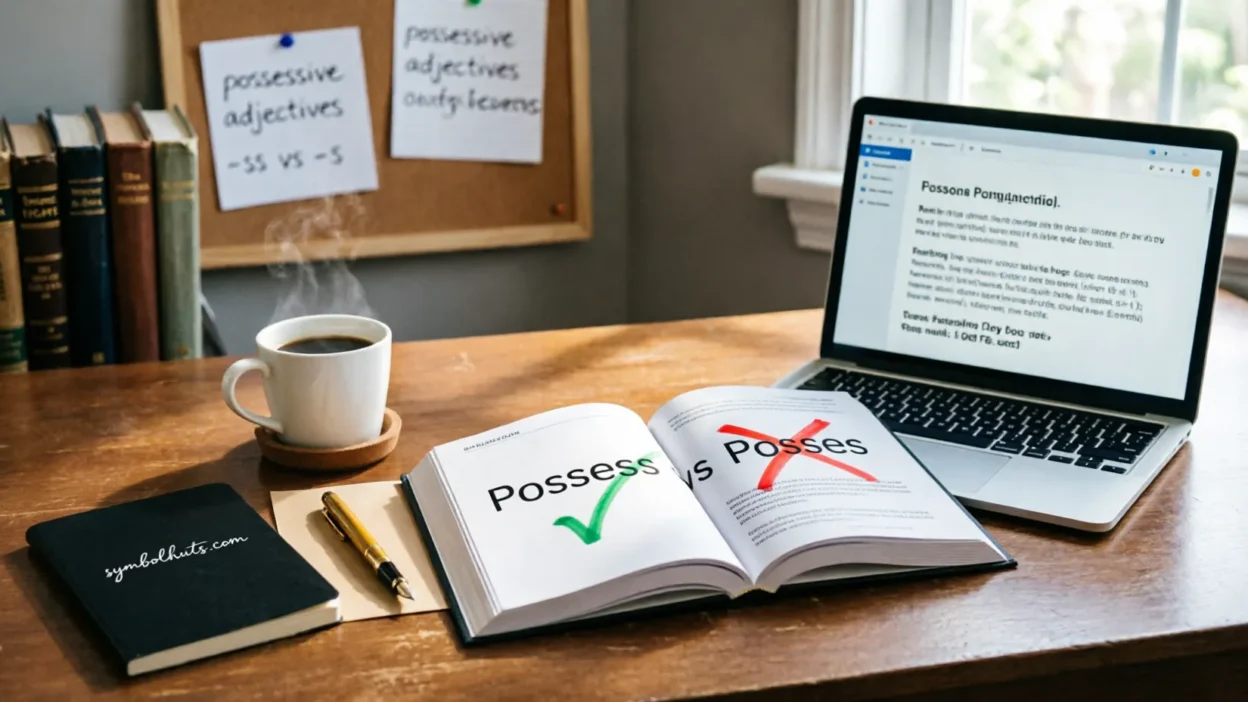
Possess is the correct English verb that means to own, have, or control something.
Posses is not the standard spelling of the verb. It is only seen as the plural form of posse, meaning a group of people, usually helping law enforcement or working together for a shared purpose.
Example:
- ✅ She possesses excellent communication skills.
- ✅ They possess valuable knowledge.
- ✅ Several posses searched the countryside. (Plural of posse)
- ❌ I posses a new laptop.
What Does “Possess” Mean?
The word possess is a verb that means to own, have, hold, or control something. It can refer to physical objects, personal qualities, abilities, emotions, or even legal ownership.
Examples
- I possess a valid passport.
- She possesses remarkable patience.
- They possess the skills needed for the project.
- The museum possesses many rare artifacts.
In everyday English, possess is often replaced with simpler words like have or own, but it remains common in formal writing.
Synonyms of Possess
- Own
- Have
- Hold
- Control
- Keep
- Maintain
- Carry
- Retain
Using these related words naturally strengthens your vocabulary while helping search engines understand the topic.
What Does “Posses” Mean?
The word posses is not another spelling of possess.
Instead, posses is simply the plural of posse.
A posse is a group of people gathered for a specific purpose, especially to help law enforcement search for someone or maintain order.
Examples
- Several posses searched the mountains.
- Local posses assisted the sheriff.
Unless you’re talking about multiple groups called posses, you almost certainly want possess instead.
Possess vs Posses: Key Difference
| Feature | Possess | Posses |
|---|---|---|
| Part of Speech | Verb | Plural noun |
| Meaning | To own or have something | More than one posse |
| Common Usage | Very common | Rare |
| Correct in everyday writing | Yes | Only in specific contexts |
| Example | I possess confidence. | Two posses joined the search. |
The biggest difference is that possess expresses ownership or having something, while posses refers to multiple groups of people.
Why Do People Confuse Possess and Posses?
The confusion happens because the words differ by only one letter.
Many English learners assume removing one “s” doesn’t change the meaning. However, English spelling often distinguishes completely different words through small letter changes.
Other reasons include:
- Similar pronunciation
- Typing errors
- Autocorrect mistakes
- Limited familiarity with the noun posse
Fortunately, remembering one simple rule makes the distinction easy.
Easy Trick to Remember the Difference
Think of it this way:
Possess has two “s” letters at the end because ownership is something you want to keep complete.
Meanwhile:
Posses = multiple posse groups.
If you’re talking about owning, having, controlling, or holding something, always use possess.
Examples of Possess in Sentences
Here are examples across different situations.
Ownership
- I possess several classic novels.
- She possesses a beautiful collection of paintings.
Skills
- They possess advanced technical skills.
- He possesses natural leadership abilities.
Qualities
- Successful people often possess determination.
- She possesses incredible patience.
Legal Context
- It is illegal to possess certain restricted items.
- Citizens may legally possess licensed property.
Examples of Posses in Sentences
Although uncommon, posses is perfectly correct when referring to multiple groups called posses.
- Several posses searched for the missing hikers.
- Rural posses worked together during the emergency.
- Different posses coordinated with local authorities.
Outside these situations, posses is usually a spelling mistake.
Common Mistakes to Avoid
Many writers accidentally substitute posses for possess.
Incorrect
- ❌ I posses a driver’s license.
- ❌ She posses great talent.
- ❌ They posses enough experience.
Correct
- ✅ I possess a driver’s license.
- ✅ She possesses great talent.
- ✅ They possess enough experience.
Always check whether you’re discussing ownership or multiple groups.
Possess in Different Forms
Learning related forms helps improve grammar.
| Form | Example |
|---|---|
| Possess | I possess confidence. |
| Possesses | She possesses patience. |
| Possessed | They possessed great wealth. |
| Possessing | He is possessing rare knowledge. (Less common than “has”) |
| Possession | The house is in his possession. |
| Possessive | English has possessive nouns. |
Understanding these related forms improves both writing and speaking.
American vs British English
Good news—there is no spelling difference between American English and British English for possess.
Both varieties use:
- possess
- possesses
- possessed
- possession
Likewise, both use posses only as the plural of posse.
The distinction remains exactly the same regardless of whether you’re writing in American or British English.
When Should You Use “Have” Instead?
Although possess is grammatically correct, native speakers often prefer have in everyday conversation.
Formal
- The company possesses extensive experience.
Natural Conversation
- The company has extensive experience.
Similarly:
Formal:
- She possesses exceptional talent.
Informal:
- She has exceptional talent.
Choosing between possess and have depends on your writing style and audience.
Related Words and LSI Keywords
If you’re researching possess vs posses, you may also encounter:
- possess meaning
- possess definition
- posses meaning
- own vs possess
- have vs possess
- possession
- possessive
- spelling differences
- English grammar
- commonly confused words
- homophones and spelling errors
- grammar mistakes
- correct English usage
- word comparison
These related terms help build a stronger understanding of the topic.
Frequently Asked Questions
Is “posses” ever correct?
Yes. Posses is correct only as the plural form of posse, meaning multiple groups of people.
Which spelling means to own something?
Possess is the correct verb meaning to own, have, or control something.
Why do people misspell possess?
Because the words look similar and many writers accidentally omit one of the final s letters.
Is “I posses a car” correct?
No. The correct sentence is:
I possess a car.
Does American English spell it differently?
No. Both American and British English use possess with the same spelling.
What is the plural of posse?
The plural is posses.
Is possess a formal word?
Yes. It sounds more formal than have, although both are correct depending on context.
Summary
Understanding possess vs posses is easier than it first appears. Possess is the verb that means to own, have, control, or hold something, and it is the correct choice in almost every everyday writing situation.
Posses, on the other hand, is simply the plural of posse, a noun referring to groups of people working together, often in law enforcement contexts.
The easiest way to avoid mistakes is to remember that whenever you’re talking about ownership, abilities, qualities, or legal possession, choose possess.
Reserve posses only for the rare occasions when you’re referring to multiple posses. Building this simple habit will improve your grammar, strengthen your writing, and help you communicate with greater confidence.