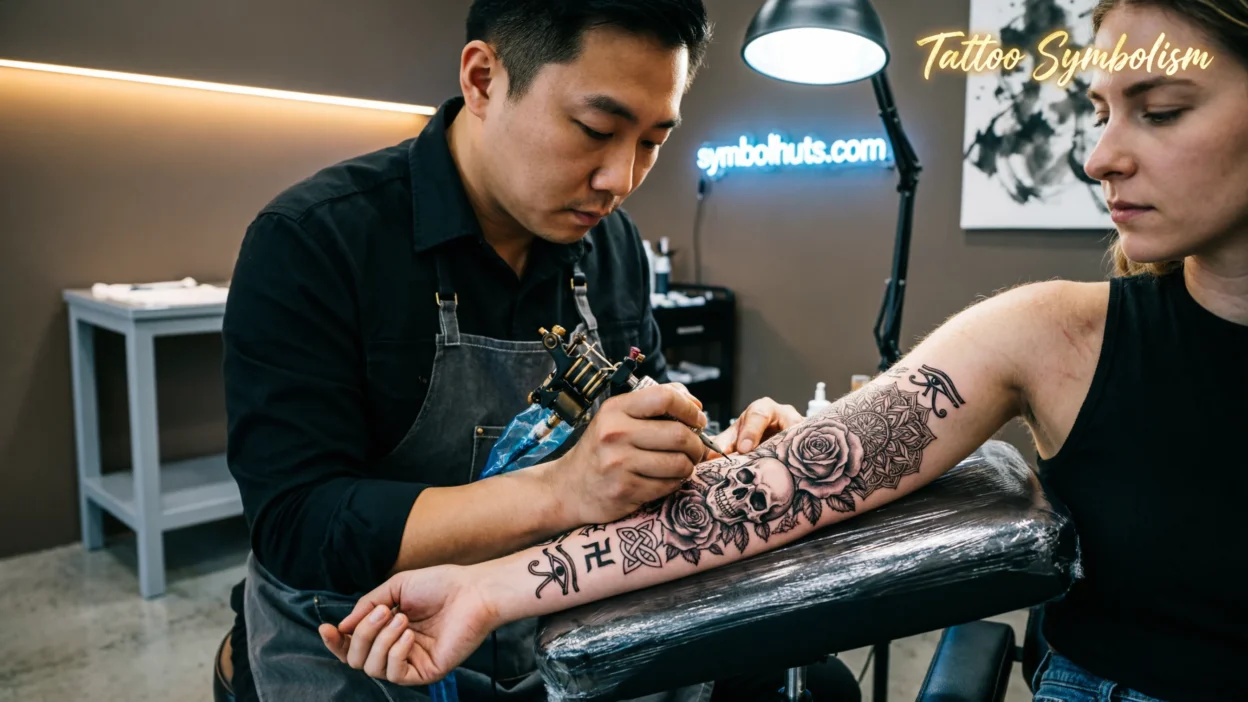
Tattoo symbolism has fascinated people for centuries because tattoos often represent identity, beliefs, emotions, and personal journeys.
From ancient tribal markings to modern minimalist designs, tattoo symbolism carries deep meanings that connect art with human experience.
Some tattoos symbolize strength and protection, while others express love, freedom, transformation, or spirituality.
People choose symbolic tattoos not only for appearance but also to tell stories about their lives.
Every symbol, color, and design can hold a hidden message that reflects personality, culture, memories, or spiritual beliefs.
Tattoo Symbolism Meaning (Clear Definition)
Tattoo symbolism refers to the deeper meaning or message behind a tattoo design. A tattoo can symbolize emotions, life experiences, values, spiritual beliefs, or cultural identity.
Different tattoo symbols often represent different ideas, including:
| Tattoo Symbol | Common Meaning |
|---|---|
| Rose Tattoo | Love, beauty, sacrifice |
| Lion Tattoo | Courage, leadership, strength |
| Butterfly Tattoo | Transformation, rebirth |
| Skull Tattoo | Mortality, resilience |
| Dragon Tattoo | Power, wisdom, protection |
| Phoenix Tattoo | Renewal, overcoming struggles |
| Anchor Tattoo | Stability, hope, grounding |
Tattoo meanings may vary depending on personal interpretation, culture, and artistic style.
What Does Tattoo Symbolism Represent?
Tattoo symbolism represents far more than body art. It often reflects the emotional and spiritual side of human life.
Common symbolic representations of tattoos include:
- Personal transformation
- Freedom and individuality
- Strength during difficult times
- Spiritual awakening
- Love and loyalty
- Cultural heritage
- Protection and guidance
- Remembrance of loved ones
Many people use symbolic tattoo designs as permanent reminders of important moments, beliefs, or goals.
Spiritual Meaning of Tattoo Symbolism
The spiritual meaning of tattoo symbolism is deeply connected to identity, energy, and self-expression. In many traditions, tattoos are believed to protect the wearer or strengthen spiritual connection.
Spiritual tattoos may symbolize:
- Inner growth
- Healing energy
- Enlightenment
- Rebirth
- Sacred protection
- Connection with the universe
Symbols like mandalas, lotus flowers, sacred geometry, moons, suns, and spiritual animals are commonly used in meaningful tattoo art.
For some individuals, tattoos become visual affirmations that guide their spiritual journey and personal evolution.
Biblical / Religious Meaning of Tattoo Symbolism
The religious meaning of tattoo symbolism differs across beliefs and traditions. In Christianity, tattoos have sometimes been viewed cautiously because of passages such as Leviticus 19:28, which discourages marking the body.
However, modern interpretations vary widely. Many Christians today use tattoos to express faith, devotion, and spirituality through symbols such as:
- Cross tattoos
- Angel wings
- Doves
- Bible verses
- Praying hands
In other religions and spiritual traditions, tattoos may symbolize protection, status, sacred rituals, or connection to divine power.
Religious tattoo symbolism often depends more on intention and meaning than the tattoo itself.
Tattoo Symbolism in History and Culture
Tattoo symbolism has existed throughout human history across many civilizations and cultures.
Ancient Cultures
Ancient Egyptians used tattoos for spiritual and protective purposes. Polynesian tribes developed intricate symbolic tattoo patterns that represented ancestry, bravery, and social status.
Japanese Tattoo Symbolism
Traditional Japanese tattoos often feature dragons, koi fish, tigers, and cherry blossoms. These designs symbolize courage, perseverance, balance, and honor.
Tribal Tattoo Meanings
Tribal tattoo symbolism commonly reflects identity, family heritage, warrior spirit, and connection with nature.
Modern Cultural Influence
Today, tattoos symbolize individuality and creativity. They are widely accepted as forms of artistic and emotional self-expression.
Tattoo Symbolism in Literature and Art
In literature and art, tattoo symbolism is often used to represent hidden emotions, rebellion, identity, or transformation.
Writers and artists frequently use tattoos to show:
- A character’s past experiences
- Emotional scars
- Personal freedom
- Social resistance
- Loyalty and belonging
In visual art, tattoos may symbolize beauty mixed with pain, showing the relationship between body, memory, and storytelling.
Modern films, novels, and paintings often portray tattoos as symbols of mystery, strength, or inner struggle.
Dream Meaning of Tattoo Symbolism
Dreaming about tattoo symbolism usually relates to identity, self-expression, or lasting emotional experiences.
Common tattoo dream meanings include:
- Getting a tattoo: desire for change or self-expression
- Seeing someone else’s tattoo: curiosity about hidden truths
- Fading tattoos: fear of losing identity or memories
- Painful tattoo experience: emotional struggles or transformation
Tattoo dreams may also reflect personal growth, confidence, or the desire to leave a lasting impact.
Modern Meaning of Tattoo Symbolism
In modern society, tattoo symbolism has become more personal and creative than ever before.
People now choose tattoos to symbolize:
- Mental strength
- Survival after hardship
- Self-love
- Empowerment
- Artistic identity
- Individual freedom
Minimalist tattoos, symbolic line art, celestial symbols, and meaningful quotes have become especially popular.
Social media and celebrity culture have also influenced modern tattoo meanings, turning tattoos into both fashion statements and emotional symbols.
Popular Types of Symbolic Tattoos
Here are some widely recognized symbolic tattoo themes:
Animal Tattoos
- Wolves symbolize loyalty and instinct
- Eagles represent freedom and vision
- Snakes symbolize transformation and rebirth
Nature Tattoos
- Trees represent growth and stability
- Mountains symbolize endurance
- Waves reflect emotional depth and life changes
Spiritual Symbols
- Lotus flowers symbolize enlightenment
- Mandalas represent balance and harmony
- Moon tattoos reflect intuition and mystery
Memorial Tattoos
These tattoos honor loved ones, important memories, or life-changing moments.
FAQs:
What is the purpose of tattoo symbolism?
Tattoo symbolism allows people to express emotions, beliefs, memories, and identity through meaningful body art.
Do tattoos always have symbolic meanings?
Not always. Some tattoos are purely artistic, while others hold deep personal or spiritual significance.
Which tattoo symbolizes strength?
Lion tattoos, phoenix tattoos, dragon tattoos, and warrior symbols commonly represent strength and resilience.
Are spiritual tattoos meaningful?
Yes. Spiritual tattoos often symbolize healing, enlightenment, protection, or inner transformation.
Can tattoo symbolism change over time?
Yes. A tattoo’s meaning can evolve as a person gains new experiences and perspectives throughout life.
Conclusion
Tattoo symbolism reflects the powerful connection between art, identity, and human emotion.
If spiritual, cultural, emotional, or personal, tattoos often carry meanings that last a lifetime.
Every symbolic tattoo tells a story, making body art one of the most meaningful forms of self-expression.