Wishbone symbolism has fascinated people for centuries, representing luck, hope, and the belief that wishes can come true.
From ancient rituals to modern traditions, the wishbone carries deep meaning tied to fortune, choices, and destiny.
If snapped at dinner tables or worn as jewelry, it continues to inspire optimism and the idea that something good is just around the corner.
Wishbone Symbolism Meaning (Clear Definition)
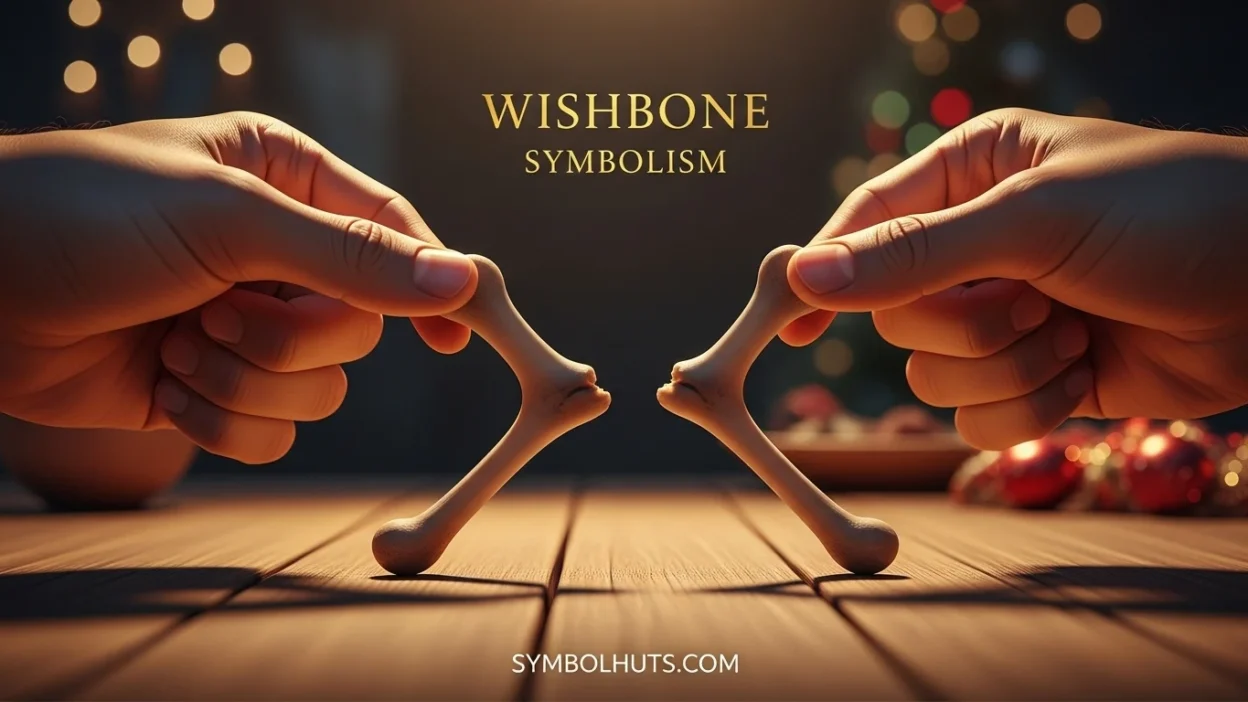
Wishbone symbolism refers to the idea of luck, desire, and future outcomes tied to the act of making a wish. Traditionally, two people pull apart a wishbone, and the one left holding the larger piece is believed to have their wish granted.
At its core, it symbolizes:
- Hope for a better future
- The power of belief
- The unpredictability of fate
What Does Wishbone Symbolism Represent?
The wishbone represents several universal themes that resonate across cultures and generations.
Key Symbolic Meanings:
- Good Luck: A sign of fortune and positive outcomes
- Hope & Wishes: The belief that dreams can come true
- Choice & Destiny: Two people pulling reflects life’s decisions
- Competition & Reward: Only one wins, symbolizing life’s challenges
- Faith in the Unknown: Trusting that luck is on your side
Spiritual Meaning of Wishbone Symbolism
Spiritually, the wishbone is often seen as a manifestation tool—a symbol of focusing intention and trusting the universe.
It reflects:
- The connection between desire and reality
- The importance of belief in unseen forces
- Letting go and allowing fate to unfold
Many interpret the wishbone as a reminder that faith and intention shape outcomes, even when results are uncertain.
Biblical / Religious Meaning of Wishbone Symbolism
While the wishbone itself is not directly mentioned in the Bible, its symbolic themes align with spiritual teachings.
It can be connected to:
- Faith: Trusting in divine plans
- Hope: Believing in blessings yet to come
- Provision: God providing outcomes beyond human control
In a broader religious sense, the wishbone mirrors the idea of placing hopes in a higher power rather than relying solely on chance.
Wishbone Symbolism in History and Culture
The origins of wishbone symbolism trace back to the ancient Etruscans, who believed birds were divine messengers. They preserved bird bones for spiritual rituals.
Later, the Romans adopted the practice, spreading it across Europe. Eventually, it became part of Thanksgiving traditions in the United States, where breaking the wishbone became a fun and meaningful custom.
Cultural Highlights:
- Ancient rituals linked to divination
- European traditions of luck and fortune
- Modern family customs centered on hope
Wishbone Symbolism in Literature and Art
In literature and art, the wishbone often symbolizes desire, chance, and life’s turning points.
Writers and artists use it to represent:
- The tension between luck and effort
- The fragility of dreams
- Moments where fate decides the outcome
It appears in storytelling as a subtle reminder that not everything is within human control.
Dream Meaning of Wishbone Symbolism
Dreaming of a wishbone can carry powerful personal messages.
Common Interpretations:
- Breaking a wishbone: A decision or competition in waking life
- Holding the larger piece: Success, achievement, or luck
- Broken or weak wishbone: Disappointment or missed opportunity
- Making a wish: Deep desires seeking fulfillment
These dreams often reflect your inner hopes, fears, and expectations about the future.
Modern Meaning of Wishbone Symbolism
Today, wishbone symbolism has evolved but remains deeply relevant.
It is commonly seen in:
- Jewelry (necklaces, charms) symbolizing luck
- Tattoos representing hope and personal dreams
- Social traditions celebrating positivity and good fortune
In modern life, the wishbone stands for:
- Staying optimistic despite uncertainty
- Believing in opportunities
- Embracing both luck and effort
Summary of Wishbone Symbolism
| Symbol Aspect | Meaning |
|---|---|
| Luck | Positive outcomes and fortune |
| Hope | Belief in wishes coming true |
| Destiny | Life’s unpredictable path |
| Competition | Winning and losing moments |
| Faith | Trust in unseen forces |
FAQs:
What does a wishbone symbolize in simple terms?
A wishbone symbolizes luck, hope, and the belief that wishes can come true through fate or chance.
Why do people break a wishbone?
People break a wishbone as a tradition to make wishes, believing the winner will have their wish fulfilled.
Is the wishbone a good luck symbol?
Yes, it is widely considered a powerful symbol of good luck and positive outcomes.
What does a wishbone tattoo mean?
A wishbone tattoo represents hope, personal dreams, and a desire for good fortune in life.
What does dreaming about a wishbone mean?
It often reflects your desires, choices, or hopes for success and favorable outcomes.
Conclusion
Wishbone symbolism beautifully captures the human desire for hope, luck, and a brighter future.
If rooted in ancient rituals or modern traditions, it reminds us that belief, intention, and a little bit of chance all play a role in shaping our lives.
Sometimes, simply wishing is the first step toward making something real.

Christian Jeremy is a creative content writer and digital strategist at SymbolHuts.com. She specializes in exploring symbols, meanings, and visual communication, providing insightful and engaging content. With a passion for design and language, Christian helps readers understand symbolism, improve visual literacy, and connect with ideas in a clear and inspiring way.