Bestiny Symbolism shows fate and destiny across cultures shaping life meanings in worldwide traditions and mythologies today explored deeply
The idea of fate and destiny appears in cultures and culture, shaping life across worldwide mythologies.
It is a recurring theme seen in many and various interpretation of events that unfold in human stories and thinking.
Some beliefs say everything is predetermined, while others give the power to choose a path.
This creates numerous symbols that represent different aspects of human experience, often shown in art and literature, where ideas are portrayed in symbolic form.
A guide gives a complete overview with notable insight, explained in simple terms. It connects all ideas in a handy way, carefully created to improve understanding of deep traditions and beliefs.
Destiny Symbolism Meaning (Clear Definition)
Destiny symbolism means the use of signs, images, or concepts that represent fate, life purpose, and the idea that events are guided by a higher order.
It often connects with themes like:
- Predetermined life path
- Cosmic order
- Soul mission
- Divine timing
- Karmic influence
In many traditions, destiny is not random—it is meaningful and symbolic, guiding people toward growth and understanding.
What Does Destiny Symbolism Represent?
Destiny symbolism represents the belief that life is not accidental. Instead, every event carries meaning and direction.
It commonly represents:
- Guidance: Life is directed by unseen forces
- Purpose: Every person has a role or mission
- Connection: Everything in life is interconnected
- Timing: Events happen at the right moment
- Transformation: Challenges lead to personal growth
Symbolic meanings of destiny at a glance
| Symbol | Meaning |
|---|---|
| Thread of life | Life path is woven and connected |
| Clock or time | Divine timing and patience |
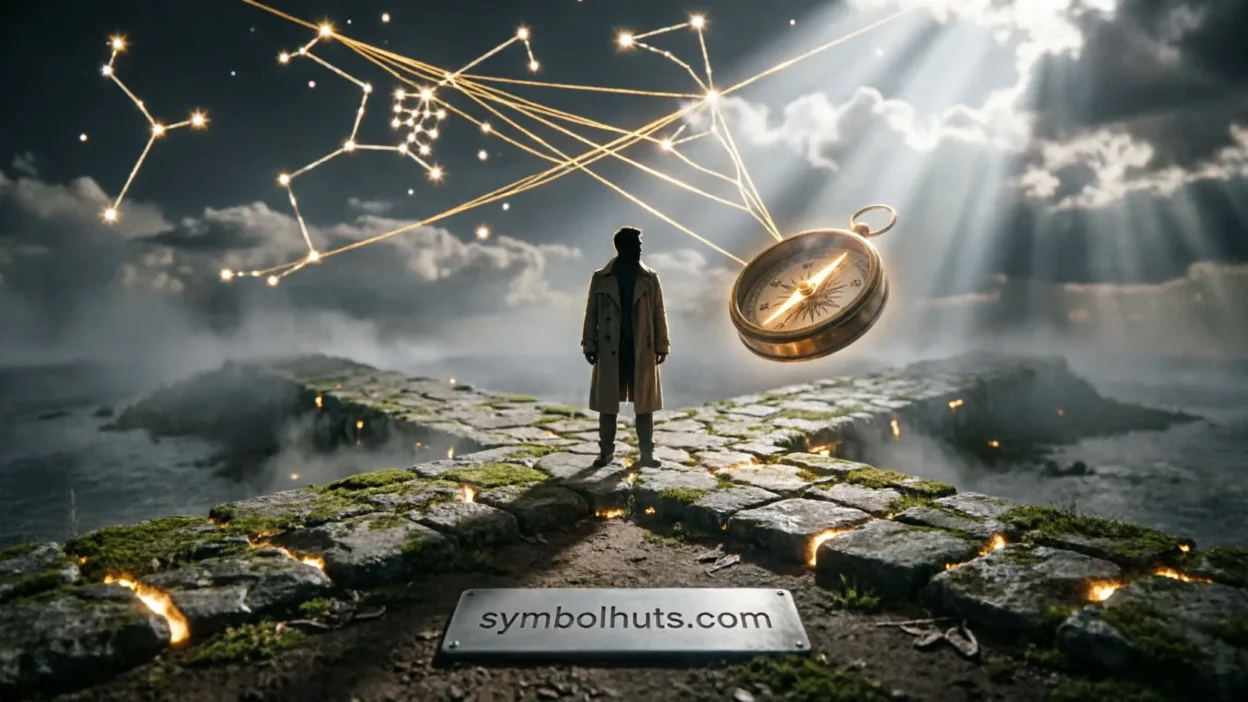
| Roads or paths | Life choices and direction |
| Stars | Cosmic guidance and fate |
| Knots | Interconnected events |
Spiritual Meaning of Destiny Symbolism
Spiritually, destiny symbolism is deeply connected to the idea that the universe guides each soul toward growth and enlightenment.
Many spiritual beliefs suggest:
- Your path is written in a higher realm
- Challenges are lessons, not punishments
- Intuition is a tool for understanding destiny
- Synchronicities are signs from the universe
In this view, destiny symbolism encourages trust in life’s process, even during uncertainty.
Biblical / Religious Meaning of Destiny Symbolism
In religious contexts, destiny symbolism often relates to divine will and life purpose.
In Christianity, the idea of destiny is linked to God’s plan for each individual. The Bible often highlights themes of purpose, calling, and divine timing.
Similarly, in the Bhagavad Gita, destiny is closely tied to karma and dharma, where actions influence future outcomes while still aligning with a greater cosmic order.
Across religions, destiny symbolism emphasizes:
- Faith in divine planning
- Moral responsibility
- Life lessons through experience
Destiny Symbolism in History and Culture
Throughout history, destiny symbolism has appeared in myths, folklore, and cultural beliefs.
In ancient civilizations:
- Greeks believed in the Moirai (Fates) who controlled life threads
- Romans viewed destiny as “fatum,” a fixed path
- Eastern traditions connected destiny with karma and rebirth
In many cultures, symbols like knots, wheels, and stars were used to represent life’s predetermined flow and spiritual order.
Destiny Symbolism in Literature and Art
Artists and writers have long used destiny symbolism to explore human life and fate.
Common representations include:
- Broken chains (freedom vs fate)
- Crossroads (choices in life)
- Spirals (cyclical destiny)
- Threads (life story being woven)
In literature, destiny often appears as a powerful force that characters cannot escape, yet must understand to grow.
Dream Meaning of Destiny Symbolism
In dreams, destiny symbolism often appears when a person is thinking about their future or life direction.
Common dream interpretations include:
- Walking on a path → clarity about life choices
- Seeing stars → hope and guidance
- Being lost → uncertainty about destiny
- Meeting a guide → spiritual direction
Such dreams often reflect inner questions about purpose and timing.
Modern Meaning of Destiny Symbolism
In modern life, destiny symbolism is often used in psychology, self-help, and personal development.
Today, it represents:
- Self-discovery and growth
- Making meaningful life choices
- Believing in timing and opportunity
- Understanding life patterns
Even in a logical world, many people still find comfort in the idea that life has meaning beyond chance.
FAQs:
What is the main idea behind destiny symbolism?
It represents the belief that life events are guided by a meaningful path or higher order.
Is destiny symbolism religious or spiritual?
It can be both. Some view it spiritually, while others interpret it through cultural or philosophical beliefs.
What are common symbols of destiny?
Common symbols include stars, paths, clocks, and threads, all representing life direction and timing.
Can destiny symbolism appear in dreams?
Yes, it often appears in dreams as paths, journeys, or signs showing life direction.
Why is destiny symbolism important today?
It helps people find meaning, purpose, and comfort in life’s uncertainty.
Conclusion
Destiny symbolism reflects humanity’s deep desire to understand life’s purpose and direction.
If viewed spiritually, culturally, or personally, it reminds us that every moment may carry meaning. It encourages trust in timing, growth through experience, and awareness of life’s hidden patterns.

Christian Jeremy is a creative content writer and digital strategist at SymbolHuts.com. She specializes in exploring symbols, meanings, and visual communication, providing insightful and engaging content. With a passion for design and language, Christian helps readers understand symbolism, improve visual literacy, and connect with ideas in a clear and inspiring way.