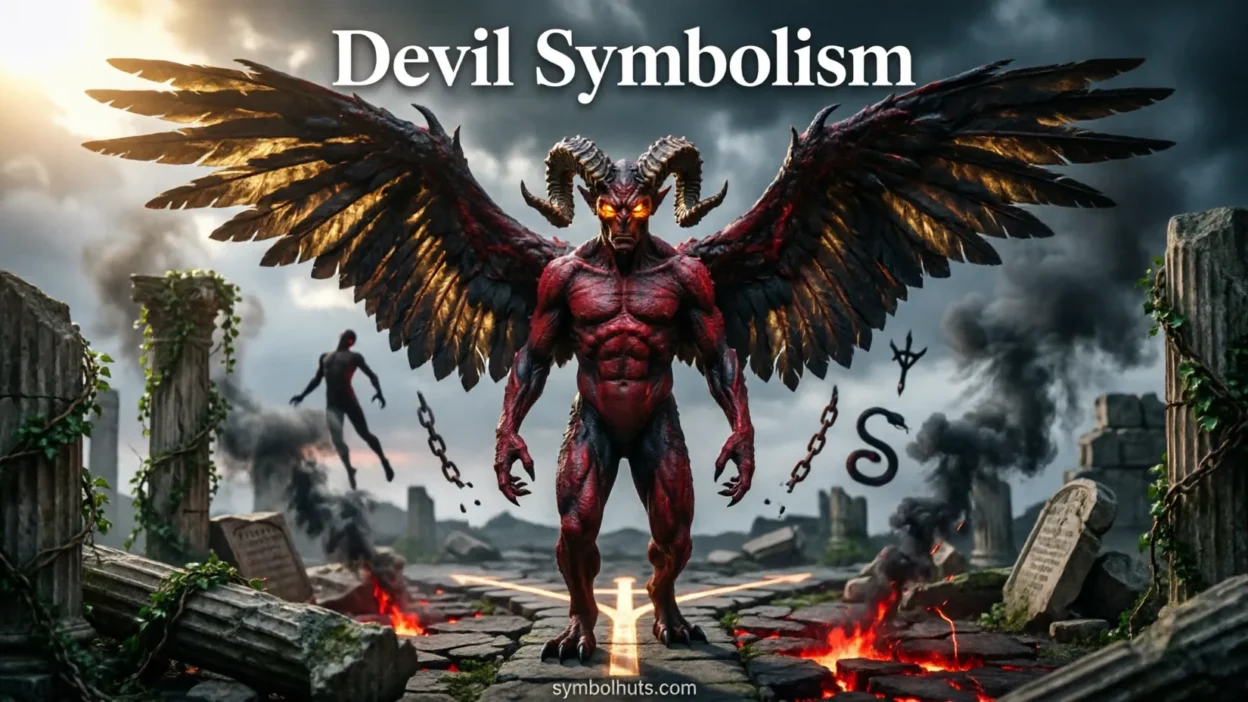
Devil symbolism has fascinated people for centuries, appearing in religion, mythology, literature, dreams, and modern culture.
While many associate the devil with evil and temptation, the symbol carries deeper meanings that go beyond fear and darkness.
Depending on the context, devil symbolism can represent rebellion, inner struggles, human desires, deception, transformation, and the battle between good and evil.
Understanding devil symbolism helps reveal how different cultures and belief systems interpret challenges, morality, and personal growth.
Devil Symbolism Meaning (Clear Definition)
Devil symbolism generally represents temptation, corruption, opposition, and the darker aspects of human nature.
It is often used as a symbol of forces that lead individuals away from truth, virtue, or spiritual enlightenment.
At a deeper level, devil symbolism can also represent personal struggles, forbidden desires, fear, and the need to confront one’s shadow self.
Rather than simply symbolizing evil, it may reflect the challenges people face on their journey toward self-awareness and growth.
Quick Symbolic Meanings of the Devil
| Symbolic Meaning | Interpretation |
|---|---|
| Temptation | Attraction to forbidden desires |
| Evil | Opposition to goodness and morality |
| Rebellion | Defiance of authority or rules |
| Deception | Illusion, lies, and manipulation |
| Shadow Self | Hidden emotions and impulses |
| Inner Conflict | Personal struggles and moral choices |
| Transformation | Growth through overcoming challenges |
What Does Devil Symbolism Represent?
Devil symbolism represents several powerful concepts that appear across cultures and traditions.
Temptation
The devil is commonly associated with temptation and the lure of immediate gratification. It reminds people of choices that may offer short-term rewards but long-term consequences.
Rebellion
In many stories, the devil symbolizes resistance against authority. This can represent both destructive rebellion and the desire for independence.
Human Weakness
Devil symbolism often reflects the flaws and weaknesses that all humans possess, including greed, pride, envy, and selfishness.
Deception
Another common meaning is illusion and manipulation. The devil frequently appears as a figure that hides truth behind attractive promises.
Personal Growth
Some modern interpretations view devil symbolism as a challenge that encourages self-reflection and personal development through adversity.
Spiritual Meaning of Devil Symbolism
Spiritually, devil symbolism often represents the obstacles that stand between a person and higher awareness.
Many spiritual traditions teach that the devil symbolizes inner struggles rather than an external force. In this sense, the devil represents fear, negative thinking, unhealthy attachments, and behaviors that prevent spiritual growth.
Spiritual lessons connected to devil symbolism include:
- Recognizing personal weaknesses
- Overcoming fear and doubt
- Practicing self-discipline
- Choosing wisdom over temptation
- Embracing self-awareness
Some spiritual teachings view the devil as a symbolic test that strengthens character and encourages inner transformation.
Biblical / Religious Meaning of Devil Symbolism
In Christianity, the devil is generally understood as a fallen angel who opposes God and seeks to lead people away from righteousness.
Biblical symbolism often portrays the devil as:
- The tempter
- The deceiver
- The adversary
- The accuser
- The embodiment of evil
Stories throughout the Bible use devil symbolism to illustrate moral choices, spiritual warfare, and the importance of faith.
Other religions and belief systems have similar figures representing chaos, temptation, or opposition to divine order. These figures often serve as reminders of the ongoing struggle between positive and negative influences.
Devil Symbolism in History and Culture
Throughout history, devil symbolism has appeared in folklore, mythology, and cultural traditions worldwide.
Medieval Europe
In medieval societies, the devil symbolized sin, moral corruption, and the dangers of straying from religious teachings.
Folklore and Legends
Many folk tales feature devil-like characters who tempt humans with power, wealth, or knowledge in exchange for a price.
Mythological Parallels
Various cultures have mythological beings that resemble the symbolic role of the devil, representing chaos, trickery, or destruction.
Cultural Warnings
Historically, devil symbolism often served as a warning against harmful behavior and unethical choices.
Devil Symbolism in Literature and Art
In literature and art, devil symbolism is often used to explore complex human emotions and moral dilemmas.
A devil character may symbolize:
- Ambition without limits
- Moral corruption
- The consequences of temptation
- Internal conflict
- The darker side of human nature
Artists frequently use devil imagery to create powerful visual contrasts between light and darkness, virtue and vice, freedom and responsibility.
In many classic stories, the devil functions as a symbolic figure that challenges protagonists and reveals hidden truths about themselves.
Dream Meaning of Devil Symbolism
Dreams involving devil symbolism do not necessarily predict negative events. Instead, they often reflect internal emotions and psychological struggles.
Common Dream Interpretations
Seeing a devil
May symbolize fear, guilt, temptation, or unresolved conflict.
Talking to a devil
Can suggest confronting hidden desires or difficult truths.
Being chased by a devil
Often represents avoidance of personal issues or emotional challenges.
Defeating a devil
Usually symbolizes personal strength, growth, and overcoming obstacles.
A friendly devil
May indicate that a tempting situation appears harmless but deserves careful consideration.
Dream interpretations depend heavily on personal experiences and emotions surrounding the dream.
Modern Meaning of Devil Symbolism
Today, devil symbolism is often viewed through psychological, cultural, and artistic perspectives.
Modern interpretations include:
- Challenging social norms
- Exploring personal freedom
- Confronting inner fears
- Understanding human complexity
- Recognizing destructive habits
In popular culture, devil imagery is frequently used to symbolize rebellion, confidence, risk-taking, and the struggle between opposing forces within the self.
Rather than representing pure evil, modern devil symbolism often highlights the complexities of human behavior and personal choice.
FAQs:
What is the main meaning of devil symbolism?
Devil symbolism primarily represents temptation, deception, rebellion, and the darker aspects of human nature. It can also symbolize personal struggles and transformation.
Is devil symbolism always negative?
No. While it is often associated with evil or temptation, it can also represent self-awareness, personal challenges, and growth through adversity.
What does seeing devil symbolism in dreams mean?
It commonly reflects inner conflict, fear, temptation, guilt, or unresolved emotional issues that require attention.
What does the devil symbolize spiritually?
Spiritually, the devil often represents obstacles, negative influences, and personal weaknesses that must be overcome for growth.
Why is devil symbolism common in literature?
Writers use devil symbolism to explore morality, temptation, ambition, and the complex nature of human behavior.
Conclusion
Devil symbolism is far more complex than a simple representation of evil.
Across spirituality, religion, culture, literature, and dreams, it often symbolizes temptation, inner conflict, deception, and transformation.
By understanding its deeper meanings, we can view devil symbolism as a powerful reminder of the choices, challenges, and personal growth that shape human experience.

Walter Terry is a skilled content creator and symbol researcher at SymbolHuts.com. He specializes in explaining symbols, their meanings, and visual communication in a clear, engaging way. Walter’s insightful content helps readers interpret visuals, understand symbolism, and connect ideas effectively across digital, educational, and creative contexts.