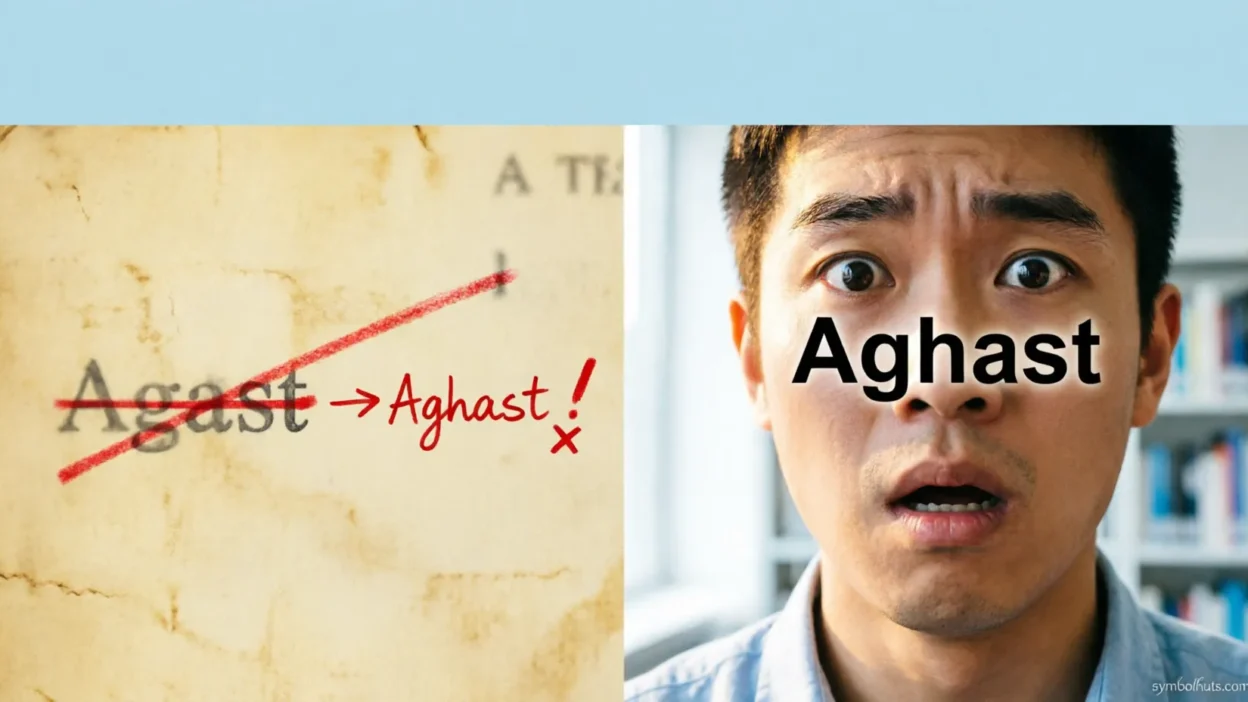
Have you ever typed “agast” when you meant “aghast” and wondered if both words are correct? You’re not alone. Many English learners and native speakers alike confuse these spellings because they look and sound similar. However, only one of them is considered a standard English word.
In this guide, you’ll learn the difference between agast vs aghast, discover the correct spelling, understand their meanings, see real-life examples, avoid common mistakes, and confidently use the right word in your writing. Whether you’re preparing for an exam, writing professionally, or simply improving your English, this article has everything you need.
Quick Answer
- Aghast is the correct spelling in modern English.
- Agast is an obsolete or extremely rare variant that is no longer used in standard English.
- Use aghast whenever you want to describe someone who is shocked, horrified, or deeply surprised.
| Word | Correct? | Meaning |
|---|---|---|
| Aghast | ✅ Yes | Filled with shock, horror, or amazement |
| Agast | ❌ No (Modern English) | Obsolete spelling of aghast |
Agast vs Aghast: Meaning
The confusion between agast vs aghast comes from historical spelling changes. While both forms appeared in very old English texts, modern dictionaries recognize aghast as the accepted spelling.
What Does Aghast Mean?
Aghast is an adjective that describes someone who feels:
- Shocked
- Horrified
- Astonished
- Appalled
- Deeply surprised
It often refers to an emotional reaction after seeing or hearing something unexpected or disturbing.
Examples:
- She was aghast when she heard the news.
- Everyone looked aghast after witnessing the accident.
- His parents were aghast at his careless decision.
- I was absolutely aghast by the mistake.
Is Agast a Real Word?
Technically, yes—but not in modern usage.
Agast is an old spelling found in Middle English literature. Over time, English spelling became standardized, and aghast replaced agast in dictionaries, books, newspapers, and academic writing.
Today, using agast is generally considered a spelling mistake unless you’re quoting historical texts.
Agast vs Aghast: Comparison Table
| Feature | Agast | Aghast |
|---|---|---|
| Modern English | No | Yes |
| Dictionary Accepted | Rarely | Yes |
| Common Usage | Obsolete | Very Common |
| Correct in School Writing | No | Yes |
| Correct in Professional Writing | No | Yes |
| Means Shocked or Horrified | Historically Yes | Yes |
| Recommended to Use | No | Yes |
Origin of Aghast
The word aghast comes from the Middle English word agast, which itself developed from Old English and Germanic roots related to fear or terror.
As English evolved, the spelling gradually changed to aghast, becoming the standard form used today.
Although the historical form agast still appears in old literature, modern English speakers almost never use it.
Examples of Aghast in Sentences
Here are examples showing the correct use of aghast:
- The audience was aghast at the unexpected ending.
- She looked aghast after reading the email.
- We were aghast to discover the truth.
- His teacher seemed aghast by his behavior.
- Everyone stood aghast as the building caught fire.
- The family was aghast at the shocking announcement.
- I was aghast when I saw the damage.
- They stared aghast at the empty room.
Incorrect Examples Using Agast
These examples are considered incorrect in modern English:
❌ I was agast when I heard the news.
✅ I was aghast when I heard the news.
❌ She looked agast.
✅ She looked aghast.
❌ They were agast by the accident.
✅ They were aghast by the accident.
Common Mistakes People Make
Many writers accidentally spell aghast incorrectly because English pronunciation can be misleading.
Common mistakes include:
- Writing agast instead of aghast
- Thinking both spellings are interchangeable
- Assuming agast is American spelling
- Forgetting the silent “h”
Remember this simple rule:
If you’re writing modern English, always choose “aghast.”
Easy Trick to Remember
Here’s a simple memory tip:
Think of the word ghost.
Both ghost and aghast contain a silent “h.”
Since both words have unusual spellings, remembering ghost can help you remember aghast.
Another trick:
Aghast = A + Ghastly
The word ghastly also relates to horror or something frightening, making it easier to remember the correct spelling.
Agast vs Aghast in American and British English
Unlike many English words that have different spellings across regions, aghast remains the same in both American and British English.
| English Variety | Preferred Spelling |
|---|---|
| American English | Aghast |
| British English | Aghast |
| Australian English | Aghast |
| Canadian English | Aghast |
There is no regional spelling difference.
Synonyms of Aghast
Depending on the context, you can also use:
- Shocked
- Horrified
- Appalled
- Astonished
- Amazed
- Alarmed
- Dumbfounded
- Stunned
- Speechless
- Startled
These words carry similar meanings but vary slightly in intensity.
Antonyms of Aghast
Opposite words include:
- Calm
- Unmoved
- Relaxed
- Composed
- Unconcerned
- Unaffected
- Indifferent
When Should You Use Aghast?
Use aghast when describing someone’s emotional reaction to:
- Bad news
- Unexpected events
- Horrible accidents
- Disturbing discoveries
- Surprising announcements
- Shocking behavior
- Frightening situations
Examples:
- She was aghast after hearing the verdict.
- We were aghast at the price increase.
- He looked aghast when the lights went out.
Why Do People Misspell Aghast?
There are several reasons:
- The silent “h” isn’t pronounced clearly.
- Spellcheck may not always catch similar-looking words.
- Fast typing leads to missing letters.
- Many people have never seen the word written before.
- Older spellings occasionally appear in historical books.
Reading regularly and proofreading your writing can help prevent this mistake.
Grammar Tips
Remember these grammar rules:
- Aghast is an adjective.
- It usually follows verbs like:
- Was
- Were
- Looked
- Felt
- Seemed
- Appeared
- It should not be used as a verb or noun.
Correct:
- They were aghast.
- She looked aghast.
Incorrect:
- They aghasted everyone.
- His aghast surprised me.
FAQs:
Is agast a correct word?
Historically, yes. In modern English, agast is considered obsolete. You should use aghast instead.
Which spelling is correct: agast or aghast?
Aghast is the correct spelling used in dictionaries, schools, publishing, and professional writing.
Why do people write agast?
People often misspell aghast because the silent “h” is easy to forget.
Is aghast used in American English?
Yes. Aghast is the correct spelling in American English, British English, Canadian English, and Australian English.
What part of speech is aghast?
Aghast is an adjective describing someone who feels shocked or horrified.
Can I use agast in essays?
No. Unless you’re discussing historical texts or quoting old literature, always use aghast.
What are good synonyms for aghast?
Common alternatives include shocked, horrified, appalled, stunned, astonished, alarmed, and speechless.
Summary
Understanding the difference between agast vs aghast is actually quite simple once you know the history. Although agast appeared in older forms of English, it has become obsolete and is no longer accepted in standard modern writing. Today, aghast is the only spelling you should use when describing someone who feels shocked, horrified, or deeply surprised.
If you’re unsure, remember that aghast is the dictionary-approved spelling in both American and British English. Using the correct form improves your writing, prevents spelling mistakes, and helps you communicate more clearly. A quick proofreading check can ensure you never confuse these two spellings again.
Actionable Takeaway
If you remember only one thing from this guide, make it this: always use “aghast” in modern English. Treat agast as a historical spelling that belongs only in older texts or literary discussions. Save this comparison for future reference, and the next time you write about someone being shocked or horrified, you’ll know exactly which spelling to choose.

Noah Peter is a talented writer and researcher at SymbolHuts.com. She focuses on symbols, their meanings, and visual communication, delivering clear, engaging content. With a passion for design and creative expression, Noah empowers readers to understand symbolism, interpret visuals confidently, and connect ideas effectively in everyday life and digital spaces.