Have you ever typed “cancell” and wondered whether it was a correct spelling? You’re not alone. Many English learners and even native speakers accidentally add an extra “l” when writing cancel, leading to confusion about which version is right.
If you’re searching for cancell vs cancel, this guide will clear up the confusion. We’ll explain the correct spelling, provide examples, discuss American vs British English differences, highlight common mistakes, and help you remember the correct form with simple tips.
Quick Answer
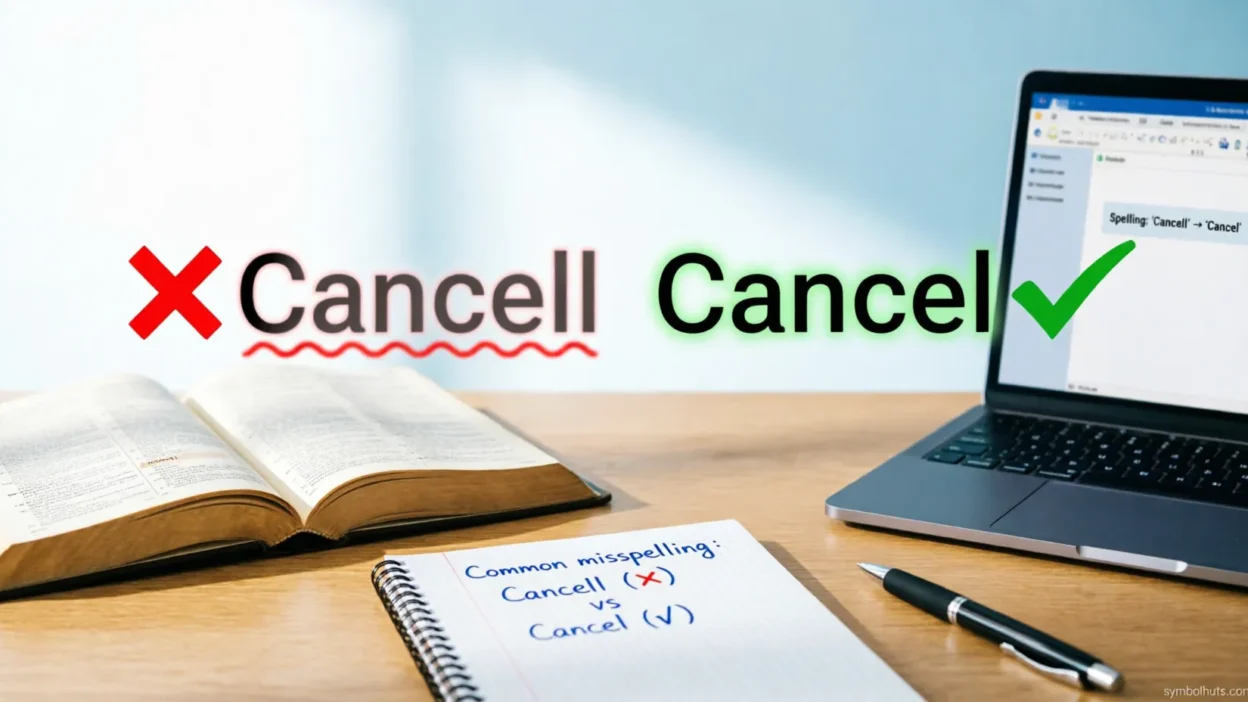
The correct spelling is cancel.
- ✅ Cancel is the correct English word.
- ❌ Cancell is a misspelling and is not recognized in standard English dictionaries.
Whether you’re writing in American English or British English, the base verb is always cancel. The differences only appear in some related forms like canceled/cancelled and canceling/cancelling.
Cancell vs Cancel: What’s the Difference?
The difference is very simple:
| Word | Correct? | Meaning |
|---|---|---|
| Cancel | ✅ Yes | To stop, call off, revoke, or end something |
| Cancell | ❌ No | Incorrect spelling of “cancel” |
The extra “l” in cancell is simply a spelling mistake.
Whenever you want to describe stopping an event, ending a subscription, voiding an agreement, or removing something, always use cancel.
What Does Cancel Mean?
Cancel is a verb that means:
- To call something off
- To stop a planned event
- To make something no longer valid
- To revoke or terminate
- To remove an arrangement or reservation
It can also function as a noun in specialized contexts, but its most common use is as a verb.
Examples
- We had to cancel the meeting.
- Please cancel my hotel reservation.
- They decided to cancel the concert because of bad weather.
- I want to cancel my subscription.
All of these examples use the correct spelling.
Is “Cancell” Ever Correct?
No.
Cancell is never considered a correct English word.
It does not appear as a standard dictionary entry and should always be corrected to cancel.
Many spelling errors happen because people confuse the base word with related forms such as:
- cancelled
- cancelling
Since these words contain double l in British English, some writers mistakenly assume the base verb should also have two l’s. That assumption is incorrect.
Why Do People Write “Cancell”?
There are several reasons this mistake happens.
Confusion with British Spellings
British English uses:
- cancelled
- cancelling
These words contain two l’s, but the base word remains cancel.
Typing Mistakes
Many people accidentally press L twice while typing.
Pronunciation
The pronunciation doesn’t clearly reveal the number of letters, making spelling mistakes easier.
Pattern Confusion
English contains words like:
- install
- enroll
- fulfill
These naturally end with double l, so writers sometimes assume cancel follows the same pattern.
American vs British English
This topic often causes confusion.
The base verb is identical in both versions of English.
| Form | American English | British English |
|---|---|---|
| Base verb | cancel | cancel |
| Past tense | canceled | cancelled |
| Past participle | canceled | cancelled |
| Present participle | canceling | cancelling |
Notice something important:
The word cancel never changes.
Only the derived forms differ between American and British spelling.
Examples in American English
American English usually prefers one l in the endings.
Examples:
- The flight was canceled.
- She is canceling the appointment.
- We decided to cancel the event.
Examples in British English
British English usually doubles the l in certain forms.
Examples:
- The flight was cancelled.
- She is cancelling the meeting.
- We decided to cancel the event.
Again, the verb itself stays cancel.
Common Mistakes
Here are some errors people frequently make.
❌ Incorrect
- I will cancell the order.
- Please cancell my reservation.
- They had to cancell the meeting.
✅ Correct
- I will cancel the order.
- Please cancel my reservation.
- They had to cancel the meeting.
Easy Trick to Remember
Think about this sentence:
Only the endings may change in British English.
The base word cancel always has one l.
This memory trick helps avoid the most common spelling error.
Synonyms of Cancel
Depending on context, you can also use:
- Call off
- Revoke
- Terminate
- Stop
- Withdraw
- Abandon
- Suspend
- End
- Annul
- Void
- Discontinue
- Scrap
- Abort
- Rescind
Each synonym has slightly different usage, but they all relate to stopping or ending something.
Related Words
Here are common forms of cancel:
- Cancel
- Canceled
- Cancelled
- Canceling
- Cancelling
- Cancellation
- Cancelation (less common American variant)
- Cancelable
- Cancellable
Learning these forms helps improve spelling accuracy.
Real-Life Examples
School
The principal decided to cancel classes because of heavy snow.
Business
The customer wanted to cancel the order before shipping.
Travel
We had to cancel our vacation due to illness.
Entertainment
The organizers cancelled the concert after severe weather.
Technology
You can cancel your subscription anytime through your account settings.
Grammar Tips
Remember these simple grammar rules.
- Cancel is a regular verb.
- Add -ed for past tense.
- Add -ing for present participle.
- Never write cancell.
- Choose canceled or cancelled depending on your preferred English style.
Consistency is more important than mixing spelling styles.
Comparison Table
| Feature | Cancel | Cancell |
|---|---|---|
| Correct spelling | ✅ Yes | ❌ No |
| Found in dictionaries | Yes | No |
| Used in formal writing | Yes | No |
| Accepted worldwide | Yes | No |
| Should you use it? | Absolutely | Never |
How Spell Checkers Treat “Cancell”
Modern spelling tools such as Microsoft Word, Google Docs, Grammarly, and most browsers automatically identify cancell as an error.
They usually recommend replacing it with cancel.
This is another strong indication that cancell is not a standard English word.
Tips to Avoid This Mistake
- Remember the base verb has only one l.
- Read your writing before submitting it.
- Use spell-check software.
- Learn the difference between cancel, canceled, and cancelled.
- Stick to one English style throughout your writing.
- Practice using the correct spelling in everyday sentences.
Frequently Asked Questions
Is cancell a real word?
No. Cancell is not a recognized English word. The correct spelling is cancel.
Which is correct: cancell or cancel?
Cancel is correct in all forms of English.
Why do people spell cancel with two Ls?
Many people confuse the base verb with British spellings like cancelled and cancelling, which use a double l.
Is cancel the same in American and British English?
Yes. The base word is always cancel in both American and British English.
Why does British English use cancelled?
British spelling rules often double the final l before adding -ed or -ing to certain verbs.
Is canceled wrong?
No. Canceled is the preferred American English spelling.
Is cancelled incorrect?
No. Cancelled is the preferred British English spelling.
How can I remember the correct spelling?
Remember this simple tip: Cancel has only one L. Only some British endings use a double l.
Summary
Understanding cancell vs cancel is easier than it first appears. Cancel is the only correct spelling of the base verb, while cancell is simply a misspelling. Although American and British English differ in forms such as canceled/cancelled and canceling/cancelling, the original verb always remains cancel with one l.
Using the correct spelling improves your writing, strengthens your credibility, and helps you communicate clearly in emails, academic work, business documents, and everyday conversations. Whenever you’re unsure, remember that cancel is always correct, while cancell should never be used.
Actionable Takeaway
The next time you type this word, pause for a quick spelling check. Write cancel with one l, then choose canceled/canceling for American English or cancelled/cancelling for British English. Building this simple habit will make your writing more accurate, professional, and consistent.